4D BIM (4D building information modeling) is the process of adding the fourth dimension time to a 3D model by linking it with construction schedule data. This integration creates a dynamic virtual simulation of the entire construction process, allowing your teams to visualize, analyze, and optimize the sequence of activities before work begins on-site.
By enabling teams to rehearse construction virtually, 4D BIM delivers significant benefits, including more reliable schedules, proactive clash detection, improved site safety, and enhanced team collaboration.
This article provides a comprehensive guide to 4D BIM. We will define the concept, detail its key benefits and applications, explain how the process works, and cover potential implementation challenges.
By the end, you will have a clear understanding of how this technology helps deliver your complex projects with greater efficiency and predictability.
What is 4D BIM?
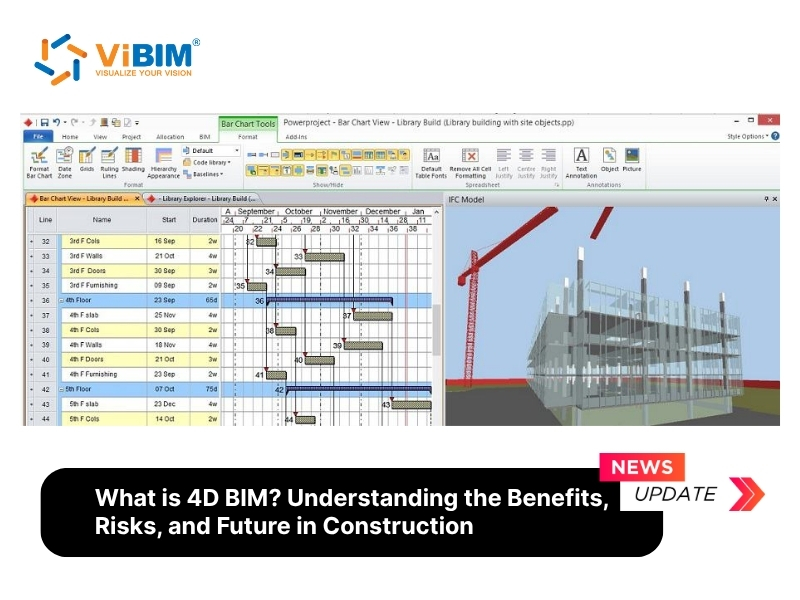
4D BIM is the process of intelligently linking 3D model elements with time-related information to create a dynamic, data-rich simulation of project execution over time. The “4D” refers to the addition of time as the fourth dimension to a 3D model’s spatial dimensions of length, width, and height. This integration produces a dynamic, data-rich model that visualizes the entire construction process, allowing your project teams to see how a project will be built from start to finish.
More than just a visual animation, 4D BIM functions as a powerful project management tool. It provides you and your stakeholders with a clear, day-by-day view of the project timeline, showing how the building and site will look at any specific point during construction.
The key distinction from a standard 3D model lies in its dynamic nature. While a 3D model provides a detailed spatial representation of what will be built and where components are located, 4D BIM adds the temporal context of when activities will occur and in what sequence. This allows your teams to analyze and optimize the construction plan before work begins on-site.
What Are the Benefits of 4D BIM for Construction?
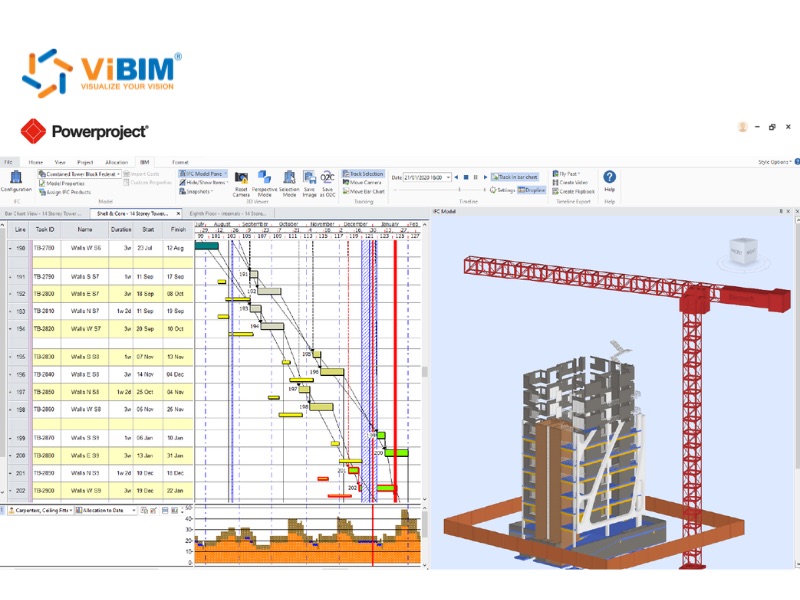
The primary benefits of 4D BIM for your construction projects are improved project scheduling, enhanced visualization, smarter time-based clash detection, and better team collaboration. It also improves construction site safety and provides enhanced tracking opportunities, leading to more predictable, efficient, and reliable project outcomes.
The following six points detail these advantages:
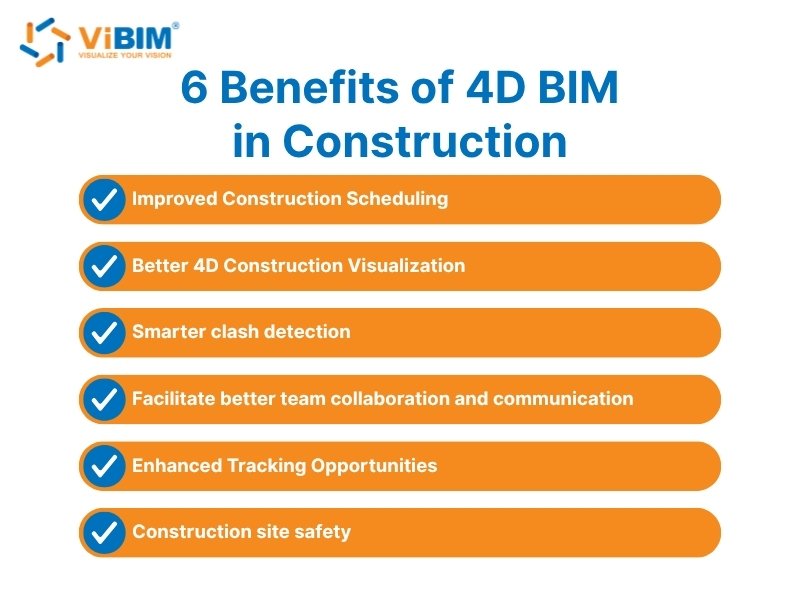
Improved Construction Scheduling
4D BIM significantly enhances your construction scheduling by providing a visual and dynamic representation of the project timeline. This allows for more accurate and realistic planning, as you can see the direct impact of your decisions on the construction sequence. By linking the 3D model with the schedule, you can easily identify and resolve potential conflicts and logistical issues that might not be apparent in a traditional Gantt chart. This proactive approach to scheduling leads to more reliable timelines, reduced delays, and a smoother construction process for your projects.
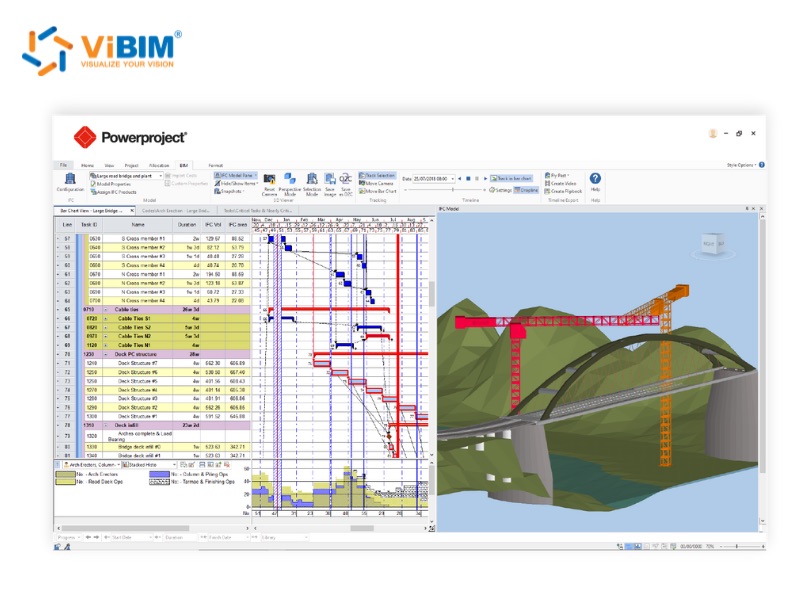
Better 4D Construction Visualization
The ability to visualize the construction process over time is one of the most powerful benefits of 4D BIM. It transforms a static set of drawings and a complex schedule into an intuitive and easy-to-understand animation of the building’s construction. This visualization is invaluable for all your project stakeholders, from the owner and designers to the contractors and subcontractors. It provides a clear and shared understanding of the construction plan, helping you align expectations and facilitate more effective communication and decision-making.
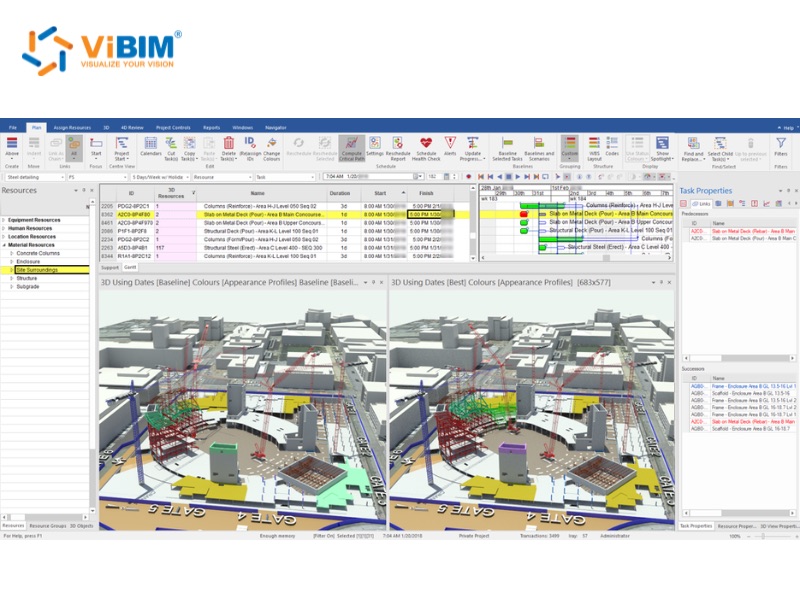
Smarter clash detection
While 3D BIM is well-known for its clash detection navisworks capabilities, 4D BIM takes it a step further by enabling time-based clash detection. This means you can identify not only spatial conflicts between permanent building elements but also conflicts that arise over time, such as those involving temporary works, equipment, and construction activities. For example, a 4D simulation can reveal if a crane’s movement will interfere with scaffolding at a certain point in the schedule. Identifying these clashes before they occur on-site prevents costly rework and delays for your project.
Facilitate better team collaboration and communication
4D BIM serves as a powerful collaboration and communication tool, bringing your entire project team together around a shared understanding of the construction plan. The visual nature of 4D simulations makes it easier for team members from different disciplines to communicate effectively, resolve issues, and make informed decisions. This collaborative environment fosters a sense of shared ownership and accountability, leading to a more integrated and efficient project team.
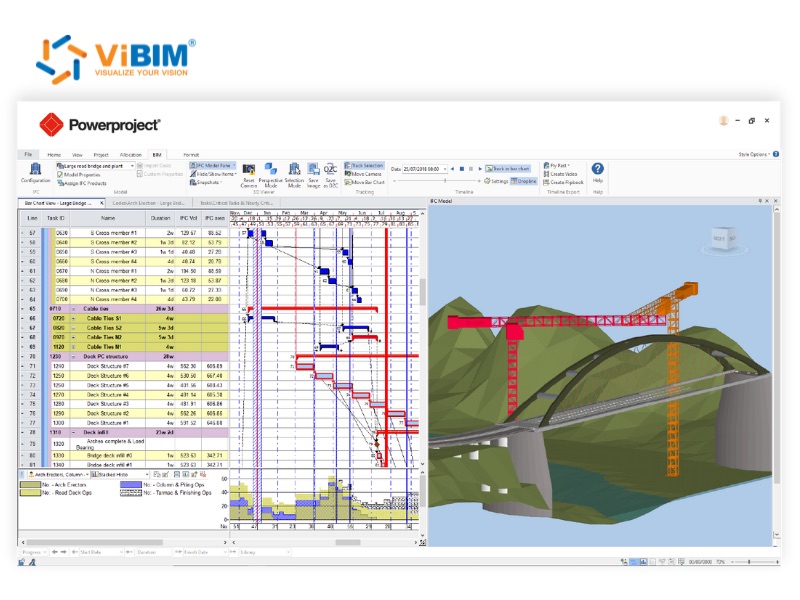
Enhanced Tracking Opportunities
By linking the 4D model with real-time data from the construction site, you can track progress more effectively. The model can be updated to reflect the as-built status of the project, allowing for a visual comparison of planned versus actual progress. This enhanced tracking provides greater insight into your project’s performance, enabling you to identify potential delays early and take corrective action to keep the project on schedule.
Construction site safety
4D BIM can significantly improve your construction site safety by allowing teams to visualize and plan for potential hazards before they occur. By simulating the construction process, your safety managers can identify high-risk activities and areas, and develop proactive safety plans to mitigate those risks. For example, you can use a 4D simulation to plan the logistics of material delivery and crane movements to avoid creating hazards for workers on-site. This focus on safety planning helps you create a safer working environment for everyone on the project.
The value of 4D planning is just the beginning. For the full picture, explore our comprehensive guide on the advantages of BIM to understand its impact across the entire project lifecycle.
How Does the 4D BIM Modeling Process Work?
The 4D BIM modeling process works by systematically integrating a 3D model with a detailed construction schedule using specialized software. Each component or element within the 3D model is linked to a corresponding task in the project timeline. This connection allows the software to generate a dynamic, time-based simulation that visually represents the entire construction sequence.
Here is a detailed breakdown of the steps involved in creating a 4D BIM model:
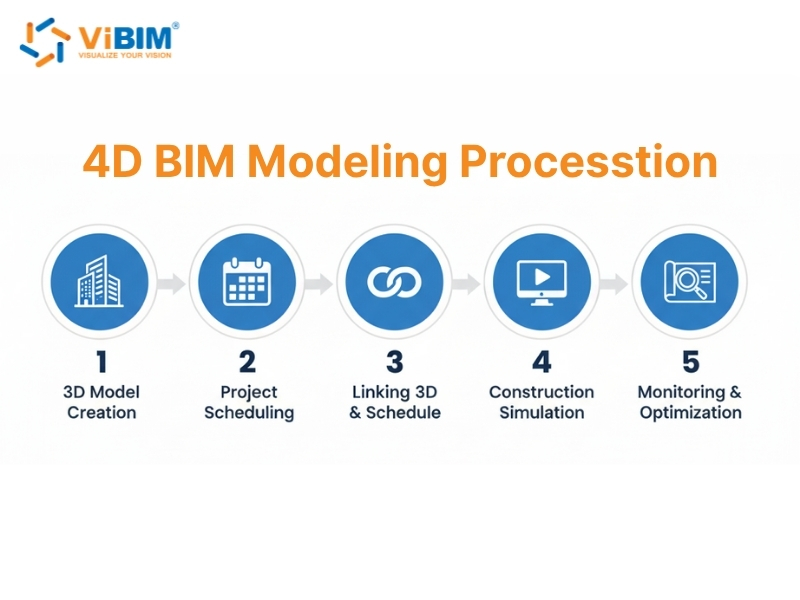
- Prepare the 3D Model: The process begins with a mature and detailed 3D BIM model. For 4D simulation to be effective, the model must be structured with an appropriate Level of Detail (LOD). In some cases, model elements created by designers, such as a large concrete slab, may need to be broken down into smaller components (e.g., individual concrete pours) to accurately reflect the real-world construction sequence.
- Develop the Construction Schedule: A comprehensive and detailed construction schedule is created, typically using planning software like Primavera P6 or Microsoft Project. This schedule includes all construction tasks, their durations, start and end dates, and the logical dependencies between them. The quality of the 4D simulation is directly dependent on the accuracy of this schedule.
- Link Model Components to Schedule Tasks: Using 4D simulation software (such as Autodesk Navisworks or Synchro 4D), project teams link the components of the 3D model to their corresponding tasks in the construction schedule. For example, the model elements for the foundation footings are linked to the “Pour Foundation Footings” task in the schedule. This step creates the intelligent data connection that defines 4D BIM.
- Generate and Visualize the 4D Simulation: Once the model and schedule are linked, the software generates the 4D simulation. This is a dynamic animation that allows stakeholders to watch the project being built virtually over time. The simulation can be played forward or backward, paused at specific dates, and viewed from any angle to understand the state of the project at any point in the timeline.
- Analyze, Optimize, and Refine the Plan: The primary purpose of the simulation is analysis. Project teams review the sequence to identify potential issues, such as spatial-temporal clashes (e.g., a crane operating where scaffolding will be), logistical problems, or safety hazards. Based on this analysis, the construction plan and schedule can be optimized and refined before any work begins on-site, saving time and preventing costly rework.
What are the popular 4D BIM software?
Specialized software is required to link 3D models with schedule data, with Autodesk Navisworks Manage and Bentley Synchro 4D being the most widely adopted platforms for 4D BIM. While these are industry leaders, several other tools offer robust capabilities for different project needs.
The following list provides a detailed overview of the most common solutions:
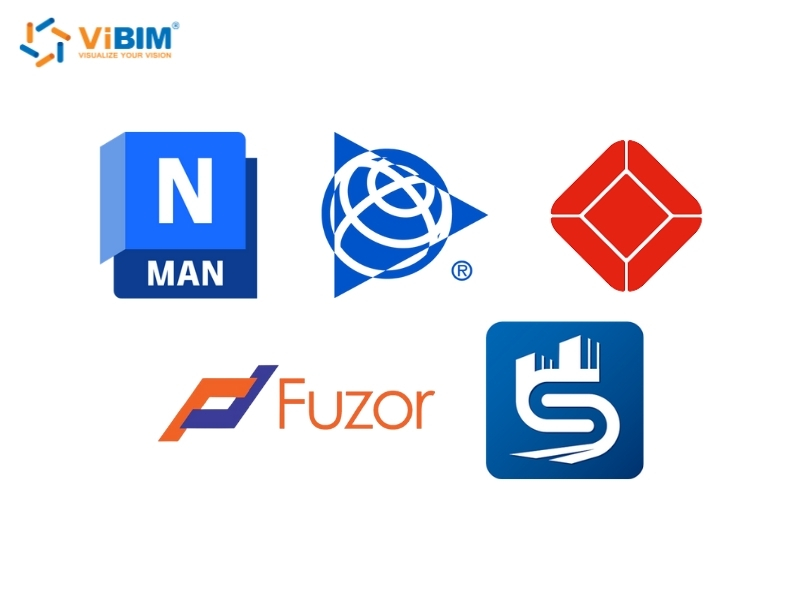
- Autodesk Navisworks Manage: A widely used project review software that excels at combining 3D models from various disciplines. Its TimeLiner tool allows teams to link model geometry to construction schedules to create 4D simulations, helping to identify and resolve issues before construction begins.
- Bentley Synchro 4D: A leading, dedicated platform for 4D construction planning and project management. It is known for its advanced capabilities in creating data-rich, optimized construction sequences and is often the go-to tool for complex projects requiring detailed logistical and temporal analysis.
- Trimble Vico Office: A comprehensive solution that integrates 4D scheduling with 5D cost estimation. It is valued for its ability to create a unified workflow where changes in the schedule are immediately reflected in the project’s budget, providing a holistic view of both time and cost impacts.
- Powerproject BIM: An application that extends the capabilities of the Powerproject scheduling software. It allows project planners to link tasks in their schedule directly to 3D model components, creating an integrated 4D plan within a familiar project management environment.
- Fuzor: This software is known for its real-time rendering and ability to create immersive Virtual Reality (VR) experiences from BIM in construction models. It offers 4D simulation capabilities with a strong focus on high-quality visualization, which is effective for stakeholder presentations and design reviews.
What Are the Risks and Challenges of Implementing 4D BIM?
Implementing 4D BIM presents several key challenges, primarily related to high upfront costs, technical interoperability hurdles, and a significant industry skills gap. Additionally, organizations must navigate potential contractual issues and establish rigorous processes to ensure data integrity throughout the project.
The following points detail these and other risks associated with adopting 4D BIM technology:
- Contractual and Legal Issues: Traditional contracts are often tailored to paper-based processes. The use of a shared digital model raises questions about data ownership, copyright, responsibility for accuracy, and liability, which require new contractual language and agreements to mitigate risk.
- Technical and Interoperability Hurdles: Effective 4D BIM relies on the seamless exchange of data between different software platforms used by architects, engineers, and contractors. Poor interoperability can lead to data loss or corruption, requiring manual rework and undermining the efficiency of the process.
- High Upfront Costs: Adopting 4D BIM involves significant investment. This includes not only the cost of software and hardware upgrades but also the substantial expense of training staff and the initial loss of productivity during the learning curve.
- Process Management and Data Integrity: Effective application of 4D BIM requires the project to be closely managed in coordination and supported by a full BIM environment throughout the construction stages. If the underlying 3D model data, schedule information, or input from any party deviates from the plan, the accuracy and reliability of the 4D simulation will be affected, potentially losing its value.
- Skill and Knowledge Gap: There is a notable skills gap in the industry. Many experienced professionals are accustomed to 2D processes, while recent graduates may lack practical construction experience. Finding or training staff who are proficient in both BIM tools and construction processes is a major challenge.
- Level of Detail (LOD): A 4D model requires a specific BIM level of development. For example, a concrete slab that a designer models as a single object may need to be broken down into multiple pours to reflect the actual construction sequence, requiring additional modeling effort by the contractor.
The Future of 4D BIM in Construction
The future of 4D BIM is moving beyond visualization toward predictive, automated, and seamlessly integrated project management. Key advancements focus on combining 4D models with other emerging technologies to create a more intelligent and immersive planning process.
Here are the key trends shaping the future of 4D BIM:
- Integration with Artificial Intelligence (AI): Future systems will use AI and generative algorithms to analyze 3D models and construction constraints. This will allow them to automatically formulate and optimize thousands of potential project sequences, transforming 4D BIM from a visualization tool into a powerful process optimization engine.
- IoT and Cloud Connectivity: Real-time data from Internet of Things (IoT) sensors on equipment and materials will feed directly into the 4D model. Cloud platforms will ensure this live information is universally accessible, providing all your stakeholders with an accurate, up-to-the-minute view of site activities.
- Immersive Planning with VR and AR: Your teams will use Virtual Reality (VR) and Augmented Reality (AR) to step inside the 4D simulation. This will enable immersive reviews of complex construction sequences, site logistics, and safety plans, leading to better understanding and decision-making.
- Creation of Digital Twins with Scan to BIM: By combining the 4D plan with real-time data and periodic point cloud scans of the actual site, captured by a Scan to BIM services provider, your project teams can create a true digital twin. This allows for a direct comparison of as-built conditions against the planned schedule, enabling immediate variance analysis and course correction.
The Scan to BIM process is where ViBIM’s core expertise in creating high-accuracy BIM models from point cloud data becomes invaluable, providing the reliable as-built information needed to keep your digital twin perfectly synchronized with reality.
FAQs
How do 4D BIM, 5D BIM, and 6D BIM compare?
4D, 5D, and 6D BIM are sequential extensions of the BIM methodology, where each new dimension adds a critical layer of data to the 3D BIM model. 4D BIM integrates time to simulate and optimize the construction schedule. 5D BIM then adds cost, enabling real-time budget tracking and financial analysis. Finally, 6D BIM incorporates facility management and sustainability data, focusing on the building’s operational lifecycle after construction is complete.
| Dimension | Added Data Layer | Primary Purpose | Key Focus |
| 4D BIM | Time & Schedule | Construction Sequencing & Planning | Visualizing how and when a project will be built to mitigate delays and logistical issues. |
| 5D BIM | Cost & Estimation | Budget Management & Financial Control | Tracking project costs in real-time against the schedule to manage the budget effectively. |
| 6D BIM | Facility Management & Operations | Lifecycle Management & Sustainability | Managing the building’s operational performance, including energy consumption, maintenance, and asset data. |
While 4D, 5D, and 6D cover scheduling, cost, and operations, they represent only part of the complete BIM framework. To see how these dimensions connect with 3D modeling and extend into 7D and beyond, explore our full breakdown of BIM dimensions and understand where each layer fits in your project lifecycle.
What is the main difference between 4D and 5D BIM?
The main difference is the type of data integrated into the model. 4D BIM adds the dimension of time by linking the 3D model to a construction schedule, which is used to visualize and optimize the sequence of construction activities. In contrast, 5D BIM adds the dimension of cost, linking financial data to the model to enable real-time cost estimation, budget tracking, and financial analysis. In short, 4D focuses on the project timeline, while 5D focuses on the project budget.
What are some real-world examples of 4D BIM applications?
4D BIM is used effectively in a wide range of complex projects to improve planning and communication. For example:
- Infrastructure Projects: On the Victoria Station Upgrade in London, a 4D model was used to simulate high-risk construction activities, ensuring an underpass could be built within a tight six-day window with minimal disruption.
- High-Rise Buildings: For the One Island East office tower in Hong Kong, 4D analysis helped optimize the floor-by-floor construction cycle, ensuring an aggressive schedule was feasible and could be maintained safely.
- Healthcare Facilities: During renovations at St. Joseph Hospital, the 4D model served as a key communication tool to show staff the construction plan, helping to coordinate activities and minimize impact on patient care.
Conclusion
In summary, 4D BIM represents a critical evolution in construction project management, moving beyond static 3D models to create a dynamic, time-integrated simulation of the entire building process. As this guide has detailed, its benefits for your projects are substantial—from enhancing schedule accuracy and improving site safety to fostering clearer team collaboration and enabling smarter, time-based clash detection. By visualizing the complete construction sequence, you can proactively identify and resolve logistical challenges before they lead to costly delays on-site.
As technology continues to advance, the integration of 4D BIM with AI, IoT, and digital twins will further solidify its role as an indispensable tool for delivering complex projects on time and on budget. Understanding the power of 4D BIM is the first step toward leveraging its full potential for your projects.
Contact ViBIM to discuss your project needs and discover how our Revit Modeling Services can bring greater predictability and efficiency to your work.