5D Building Information Modeling (5D BIM) is an intelligent process that adds the critical dimension of cost to a 4D (time-integrated) project model. It transforms a 3D design into a dynamic financial management tool by embedding detailed cost data such as material, labor, and equipment rates into every component.
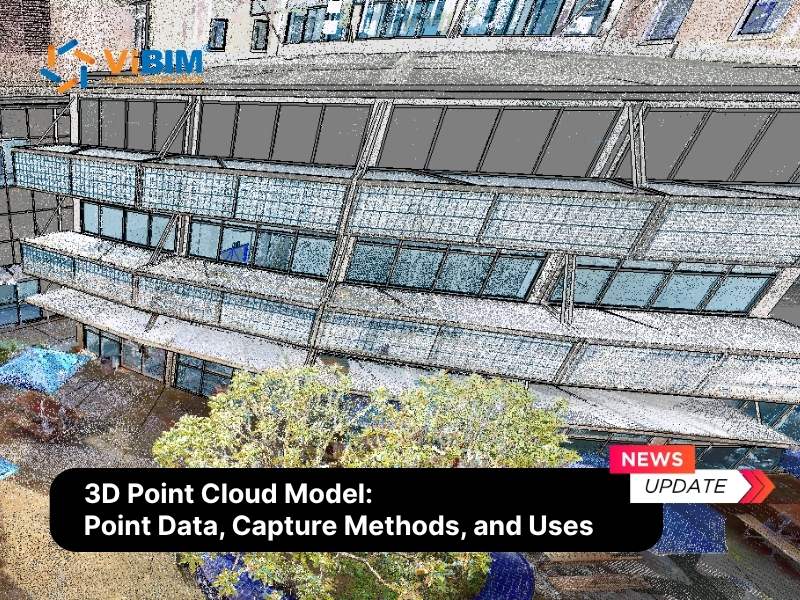
The adoption of 5D BIM provides substantial advantages, including highly accurate cost estimation, automated change order management, and improved collaboration among stakeholders. This data-driven approach offers unprecedented control over budgets, reduces financial risks, and leads to more efficient project outcomes. This is especially critical for renovation and as-built projects, where accurate initial data is paramount. The integration of high-fidelity data from point cloud scans provides the robust foundation needed for a reliable 5D BIM model.
This article provides a comprehensive guide to 5D BIM. We will explore its core definition and relationship with 3D and 4D BIM, its operational workflow, key benefits, popular software solutions, its specific role for different construction professionals, and the primary challenges in its implementation.
After reading, you will have a clear understanding of how 5D BIM can revolutionize your project’s financial management.

What Is 5D BIM In Construction?
5D Building Information Modeling (5D BIM) is an intelligent process that links a project’s 3D model components with time (4D) and cost-related information to enable automated quantity takeoff processes, accurate cost estimation, and real-time budget tracking. This methodology embeds detailed financial data such as material quantities, labor rates, and equipment costs directly into the model. The result is a dynamic, data-rich model that transforms a static geometric design into a comprehensive tool for financial management and strategic decision-making.
The adoption of this technology is a rapidly growing global trend. According to data from SkyQuest, the global 5D BIM market was valued at USD 2.9 billion in 2023 and is projected to surge to USD 8.99 billion by 2032, growing at a compound annual growth rate (CAGR) of 13.4%. This significant growth underscores the increasing reliance on 5D BIM across the industry.

What is the relationship between 3D, 4D, and 5D BIM?
The dimensions of bim in construction build upon each other, with each adding a new layer of data and functionality. The table below directly compares 3D, 4D, and 5D BIM to clarify this progression:
| Dimension | Represents | Key Function |
| 3D BIM | Geometry (Length, Width, Depth) | Creates a digital representation of the physical and functional characteristics of a facility for design visualization. |
| 4D BIM | 3D + Time/Schedule | Integrates project schedule data with the 3D model to enable construction sequencing simulation and planning. |
| 5D BIM | 4D + Cost | Adds cost data to the 4D model, allowing for real-time budgeting, cost analysis, and financial control throughout the project lifecycle. |
What are the Benefits of 5D BIM Construction?
The benefits of 5D BIM in construction are greater financial accuracy through precise cost estimation, streamlined workflows via automated change order management, and enhanced project control from data-driven decision-making. These advantages improve team collaboration and ultimately lead to reduced financial risks and more efficient outcomes.
Below are detailed information about the benefits of 5D BIM:

More Accurate Cost Estimation
5D BIM provides highly accurate cost estimations by automating data extraction directly from the intelligent components of the model. The quantity takeoff process then extracts precise quantities for materials, labor requirements, and associated costs. This eliminates the need for manual data entry and significantly reduces the time required to produce detailed estimates, ensuring efficient financial planning from the project’s inception.
This automated approach is a significant improvement over traditional methods, which rely on manual calculations from 2D drawings. Those conventional processes are often time-consuming and prone to human error, frequently leading to budget overruns and project delays.
For teams building the model foundation for 5D cost workflows, ViBIM’s Revit Modeling Services deliver data-rich multidisciplinary models that support dependable quantity takeoffs and downstream cost integration.
Automatically Updated Change Orders
5D BIM transforms the change order process into a seamless, automated workflow. When a design modification is entered into the model, the system instantly recalculates all associated material, labor, and equipment costs. The change order is then generated automatically with a clear, accurate, and transparent breakdown of the financial impact. This immediate clarity allows for swift approvals, minimizing project disruptions.
This automated approach eliminates the delays and disputes common with traditional methods. The conventional process is a notoriously cumbersome and manual workflow, where the lag time waiting for cost impacts to be calculated creates uncertainty and leads to potential conflicts between owners and contractors.

Source image: RIB CostX
Improved collaboration throughout the project lifecycle
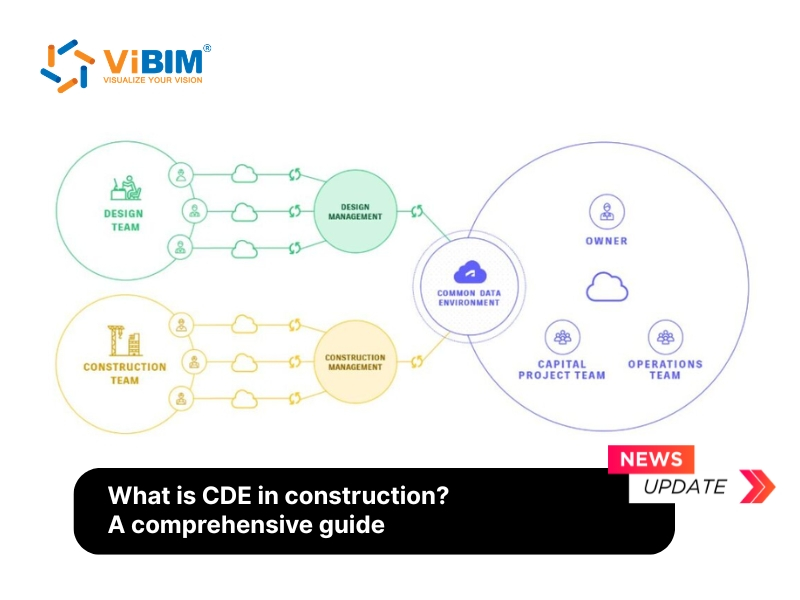
5D BIM significantly improves collaboration by creating a Common Data Environment (CDE), where all stakeholders architects, engineers, contractors, and subcontractors work from the same integrated model. This “single source of truth” ensures that everyone makes decisions based on complete, up-to-date information. It fosters a proactive ecosystem where design choices can be instantly evaluated for their cost impact, aligning the entire team around a common goal.
This unified approach demolishes the information silos that plague traditional projects. In conventional workflows, separate documents often lead to communication gaps, conflicting data, and clashes that result in costly rework and delays.

Source image: RIB CostX
Faster Decision-Making
5D BIM makes decision-making an agile and data-driven process by allowing stakeholders to test various “what-if” scenarios in real time. For example, teams can instantly compare the cost and schedule impacts of using prefabricated components versus traditional on-site construction. This ability to immediately visualize the financial and logistical consequences of different choices empowers the project team to make faster, more confident decisions, effectively enabling proactive risk mitigation and improving the overall constructability analysis.
Enhanced Visualization
5D BIM offers powerful visualization by creating a dynamic simulation that links the 3D model (what is being built), the 4D schedule (when it is built), and the 5D cost data (how much it will cost). Stakeholders, including clients and investors, can watch a virtual construction of the project unfold over time. This process clearly shows which elements are being constructed each week and how the budget is being spent. By making complex project data accessible and tangible, this enhanced visualization improves communication and aligns expectations for everyone involved.
Optimized and Integrated Scheduling
5D BIM directly integrates the project schedule with the 3D model and cost data, creating a fully resource-loaded schedule. This allows planners to simulate the entire construction sequence to optimize workflows, manage material procurement, and allocate labor more efficiently. The model provides a clear, visual understanding of how a delay in one area will impact the project’s cash flow and completion date. This leads to more realistic timelines and a significant reduction in on-site downtime.
These financial advantages are a key part of a much larger picture. For a complete overview, explore our guide on the benefits of BIM to understand how it transforms every phase of your project.
To realize these significant advantages, understanding the structured workflow is a prerequisite. So, how exactly does a standard 5D BIM workflow operate to turn a 3D model into a dynamic financial management tool?
How Does the 5D BIM Workflow Operate?
The 5D BIM workflow operates by sequentially building layers of data upon a detailed 3D model. By integrating schedule information (creating 4D) and then cost data (creating 5D), the process results in a single, intelligent model. Allows teams to simulate, analyze, and forecast project performance. The four key steps below explain this process in detail.
- Develop a Detailed 3D Model: The foundation of the workflow is a data-rich 3D BIM model. For new constructions, this is developed from design drawings, while for existing structures, it is typically created through a Scan to BIM process using Revit to accurately model conditions from point cloud data. This is not just a geometric representation; each component, from walls to pipes, must contain accurate information, including non-geometric data like material specifications and manufacturer details. The quality of this initial model is critical for the accuracy of all subsequent cost and schedule data.
- Link the Model to the Schedule (Creating 4D BIM): Next, the 3D model is linked to the construction schedule to create a 4D BIM model. Each model component is associated with a specific task in the project timeline, often imported from scheduling software like Primavera P6 or MS Project. This integration allows the team to visualize the construction sequence over time and identify potential logistical issues.
- Assign Cost Data (Creating 5D BIM): With the 4D model in place, cost data is assigned to create the 5D dimension. Cost rates for materials, labor, and equipment are linked to their corresponding components in the scheduled model. This creates an intelligent connection where the model not only knows what an object is and when it will be installed, but also exactly how much it costs.
- Simulate, Analyze, and Report: The final step involves using the completed 5D model to run simulations that visualize the construction sequence alongside real-time cost accrual. Teams can then analyze this data to generate detailed cost reports, create accurate cash flow forecasts, and make informed decisions to keep the project on budget, providing a clear, predictive view of the project’s financial performance.
What Are the Most Popular 5D BIM Software Solutions?
Achieving a full 5D BIM workflow typically involves a combination of specialized software rather than a single, all-in-one solution. The process relies on authoring tools to create the intelligent 3D model, which is then integrated with platforms that add the dimensions of time (4D) and cost (5D) for comprehensive project analysis.
The table below outlines the most popular software solutions for each stage of this workflow:
| Software Category | Popular Solutions | Primary Function |
| Modeling Software (Authoring Tools) | Autodesk Revit; Tekla Structures; ArchiCAD | Creates the foundational, data-rich 3D model where all physical and functional characteristics of the project are stored. |
| 4D/5D Integration Software | Autodesk Navisworks Manage; Synchro 4D; CostX | Combines the 3D model with schedule and cost data to enable advanced simulation, analysis, and financial forecasting. |
How Does 5D BIM Benefit Different Construction Roles?
5D BIM provides specific, role-based advantages that enhance efficiency and decision-making for various professionals across a project’s lifecycle:
- BIM Managers: It offers centralized data control within a federated model, allowing them to oversee information flow, run advanced clash detections that include cost and time implications, and ensure the highest level of model integrity.
- Quantity Surveyors (QS) & Estimators: By evolving into a specialized BIM quantity surveyor, professionals can automate the laborious quantity takeoff process, freeing them from manual calculations to focus on high-value strategic tasks like value engineering, risk analysis, and providing expert cost advice.
- Schedulers: They can create dynamic, resource-loaded schedules by visually sequencing the entire construction process. This allows them to identify logistical conflicts and optimize workflows to minimize on-site downtime.
- Procurement Teams: It enables a “just-in-time” procurement strategy by providing precise material quantities and aligning delivery dates directly with the integrated construction schedule, optimizing cash flow and reducing storage needs.
- Project Managers (PMs): It serves as a central control dashboard for real-time project health monitoring. PMs can compare planned progress against actuals, accurately forecast cash flow, and proactively manage risks.
- C-level Management: It functions as a powerful business intelligence tool, consolidating complex portfolio data into clear dashboards. This supports high-level strategic capital planning, provides insights into long-term lifecycle costing, and informs investment decisions.
Clearly, 5D BIM provides specific and immense value for each role in a project. However, implementing such a revolutionary technology is not without its challenges. Organizations need to identify and prepare to overcome numerous barriers, spanning from technology and cost to work culture.
Challenges in Implementing 5D BIM
Challenges in Implementing 5D BIM including: hurdles span technological integration, significant upfront investment in software and training, cultural resistance to new workflows, and complex legal considerations. The following points detail these primary obstacles:
- Lack of Unified Software Solutions: At present, teams must rely on several different software tools for modeling, 4D scheduling, and cost estimation to effectively embed 5D capabilities into a project. This reliance on multiple platforms creates significant challenges with software interoperability and can lead to data inconsistencies and errors.
- High Cost and Time Investment: Beyond the high price of software licenses, companies must invest heavily in training personnel on new, complex workflows. The process also requires more time in the initial planning and model setup phases, which can be a difficult adjustment for teams accustomed to traditional project timelines.
- Resistance to Change and Skills Gap: A significant human barrier is preparing and convincing teams to adopt a completely new workflow. Incorporating 5D BIM requires existing staff to learn new skills and operate in an entirely new digital domain, which can make them wary of the change and its implications for their roles.
- Increased Risk and Legal Uncertainty: The collaborative nature of 5D BIM increases legal and contractual risks for all stakeholders. There is an ongoing debate in the industry over key legal issues, such as who has ownership of the BIM model, who controls the information within it, and who has the right to access it.
- Conflict Between BIM Standards and Cost Norms: A critical challenge is the conflict between standardized BIM modeling and the rigid cost standards used by companies or regulatory bodies. Official pricing frameworks often do not align with dynamic market rates, forcing project teams to manage two parallel cost systems one for regulatory compliance and one for actual execution which undermines the “single source of truth” principle.
Understanding these challenges is only half the battle. Knowing what pitfalls to avoid is equally critical. To prevent costly setbacks during your adoption process, explore the most common mistakes in bim implementation and learn actionable strategies to sidestep each one.

FAQs
What are the components of 5D BIM?
The core components of 5D BIM are the 3D model, 4D time and scheduling data, and 5D cost data. This means it integrates a detailed geometric model with project timelines and financial information such as material costs, labor rates, and equipment expenses into a single, unified environment.
How can BIM improve cost efficiency in projects?
BIM improves cost efficiency by enabling early clash detection, generating highly accurate quantity takeoffs, and optimizing resource planning. This proactive approach significantly reduces costly rework during construction, minimizes material waste, and allows for better budget control and more predictable financial outcomes throughout the project lifecycle.
What is 6D BIM?
6D BIM, often called Integrated BIM or iBIM, is the dimension that adds facility management and lifecycle data to the 5D model. It focuses on the operational phase of a building, incorporating information such as manufacturer details, warranty information, maintenance schedules, and energy performance data to help owners manage the building more efficiently after construction is complete.
Conclucion
In essence, 5D BIM is a transformative force, shifting construction cost management from reactive guesswork to a proactive, data-driven science. By integrating cost and schedule data into an intelligent model, it delivers unparalleled accuracy in estimations, efficiency in workflows, and collaboration across all project teams. As the industry continues to evolve, adopting 5D BIM is no longer a luxury but a strategic necessity for firms aiming to deliver projects on time and within budget.