Digital construction is the integration of digital technologies, connected data, and model-based workflows into every phase of a building or infrastructure project—from early design through long-term facility operations. It replaces paper-based, sequential communication with shared digital systems where all project stakeholders access and update the same structured information.
Where traditional construction relies on 2D printed drawings and siloed file exchanges, digital construction connects disciplines through a continuous data thread. A design revision updates the cost estimate, the construction schedule, and the fabrication instructions simultaneously. That single change eliminates the information gaps behind most rework, schedule delays, and budget overruns.
Seven technology categories drive digital construction: Building Information Modeling (BIM), Common Data Environments (CDE), reality capture, IoT sensors, artificial intelligence, digital twins, and cloud-based field platforms. These tools reshape how buildings move through design, preconstruction, field execution, and operations—creating a verifiable record at each stage. Research from the McKinsey Global Institute indicates that firms applying digital workflows report productivity gains of 14–15% and cost reductions of 4–6% [3]
This guide covers what digital construction means, how each technology works, measured benefits, and common challenges in digital construction adoption.
What Is Digital Construction?
Digital construction is the integration of digital tools, workflows, and data management practices into every stage of a building or infrastructure project. It connects design intent to field execution to facility operations through shared, structured information—not disconnected files passed back and forth.
The concept goes beyond simply using software on a jobsite. Digital construction creates a continuous data thread that links architecture, engineering, procurement, construction, and operations. A change made in a BIM model during design updates the cost estimate, the schedule, and the fabrication instructions at the same time. That connected flow removes the information gaps that cause rework, delays, and cost overruns in conventional project delivery.
Three elements define digital construction at its simplest level. First, a shared data environment where project information lives in one accessible location rather than scattered across email chains and local hard drives. Second, model-based workflows that use 3D geometry tied to metadata—dimensions, materials, cost codes, installation sequences—instead of 2D drawings as the primary communication medium. Third, automated data exchange between software platforms so that information moves without manual re-entry and the errors that come with it.
The term emerged alongside BIM adoption in the early 2000s but has expanded well beyond modeling. Today, digital construction covers reality capture using laser scanners and drones, IoT sensor networks that monitor site conditions in real time, AI-driven schedule optimization, digital twins that mirror a physical asset throughout its life, and cloud-based field platforms that put current drawings into every worker’s hands.
Construction has historically been one of the slowest industries to adopt technology. McKinsey research found that construction firms spent an average of less than 1% of revenues on IT [11]—less than a third of what automotive and aerospace companies invest. Between 2020 and 2022, venture capital and private equity funds poured $50 billion invested in AEC technologies globally, 85% more than the three prior years [5] That investment signals a shift. A 2025 Deloitte survey of nearly 900 construction businesses across Asia Pacific found the average firm had adopted 6.2 different technologies, up 20% from 5.3 [6].
Digital construction isn’t one product or platform. It’s an operating philosophy: capture data once, structure it well, share it openly, and use it at every decision point from concept to demolition.
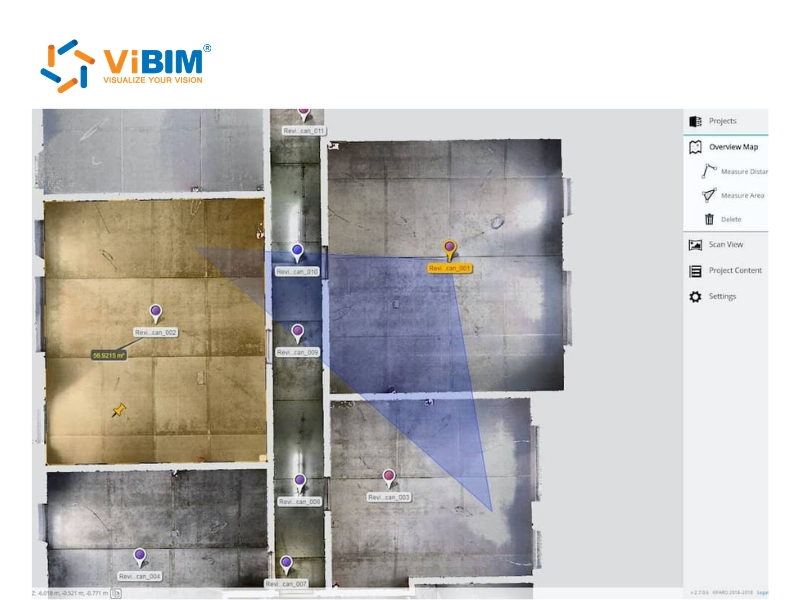
Digital Construction vs Traditional Construction
Digital construction and traditional construction differ in how information flows, how decisions get made, and how errors surface.
| Aspect | Traditional Construction | Digital Construction |
| Information format | 2D paper drawings, printed specs, physical documents | 3D BIM models with embedded data, digital documents on cloud platforms |
| Data storage | Local hard drives, filing cabinets, individual email inboxes | Common Data Environments (CDEs) with version control and access permissions |
| Communication | Phone calls, in-person meetings, faxes, email chains | Real-time collaboration platforms, model-based coordination, automated notifications |
| Clash detection | Discovered during construction when trades physically conflict | Identified in pre-construction through automated 3D coordination |
| Cost estimating | Manual quantity takeoffs from 2D plans | Model-based quantity extraction linked to cost databases |
| Scheduling | Gantt charts updated manually, disconnected from design | 4D/5D models linking geometry to time and cost data |
| Field verification | Tape measures, manual as-built sketches | Laser scanning, drone surveys, reality capture compared to model |
| Change management | Revised drawing sets redistributed by hand; outdated prints on site | Automatic model updates pushed to all connected devices |
| Quality control | Visual inspections, paper punch lists | Point cloud-to-model deviation analysis, digital checklists with photo documentation |
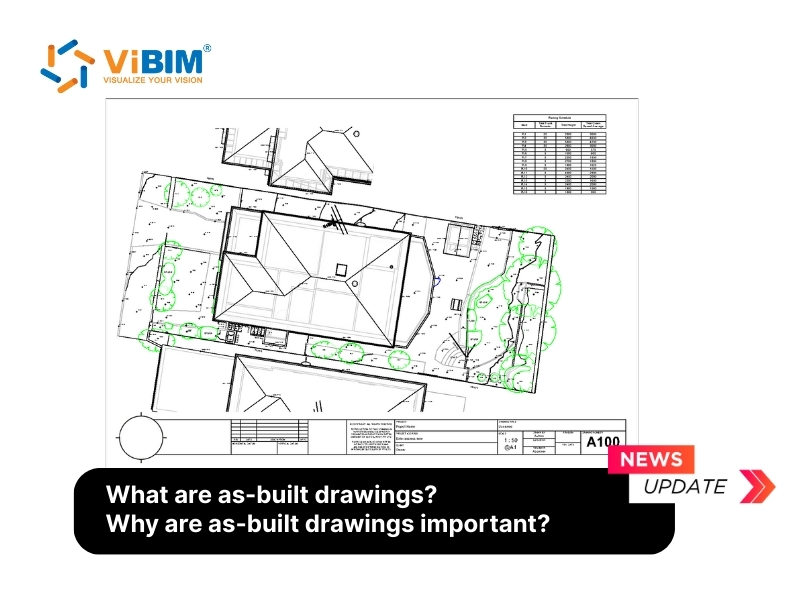
| Handover deliverables | Boxes of paper as-built drawings and O&M manuals | Structured digital model with embedded asset data ready for facility management |
The core difference: traditional construction treats information as static documents that move sequentially between parties. Digital construction treats information as a connected, living dataset that multiple parties access and update simultaneously.
This matters because construction projects fail at an alarming rate under the old model. The McKinsey Global Institute found that large projects typically run 20% over schedule and up to 80% over budget [4]. Much of this waste traces back to fragmented information. A structural engineer’s revision doesn’t reach the mechanical subcontractor. A field change gets recorded on a paper markup that stays in a trailer. An owner’s decision sits in an email thread that the project manager never sees.
Digital construction doesn’t eliminate human error. But it makes errors visible earlier—during the modeling phase rather than during concrete pours—when fixing them costs a fraction of what it would on site.
Key Digital Construction Technologies
Seven technology categories form the backbone of digital construction. Each serves a distinct function, but they generate the greatest impact when connected to each other through shared data standards and open APIs.
Building Information Modeling (BIM)
BIM is the foundation technology of digital construction. A BIM model is a 3D digital representation of a building or infrastructure asset that contains geometric data plus rich metadata—material types, structural properties, cost codes, manufacturer specs, maintenance schedules, and installation sequences.
Unlike a standard 3D model used for visualization, a BIM model functions as a database. Every element in the model—a wall, a duct, a structural column—carries structured attributes that other software can read and use. A quantity surveyor extracts material volumes directly from the model. A scheduler links model elements to construction activities to create a 4D BIM (time-linked) simulation. A facility manager queries the model after construction to find the manufacturer and warranty date of a specific air handling unit.
BIM adoption has reached measurable scale. A 2025 industry survey of 520 AEC professionals across 49 countries found that 68% had adopted BIM [7], making it the most widely used digital technology in the sector. Of those users, 65% reported that BIM delivers the highest return on investment of any digital tool they employ [7].
The technology operates at defined Levels of Development (LOD) ranging from LOD 100 (conceptual massing) through LOD 500 (verified as-built conditions). Each LOD specifies how much geometric detail and metadata a model element should contain at a given project phase. This standardization allows teams to set clear expectations about model content and reliability.
BIM is not a single software product. Autodesk Revit, Bentley MicroStation, Graphisoft Archicad, and Trimble Tekla Structures all produce BIM models. Interoperability between these platforms relies on open data standards such as Industry Foundation Classes (IFC), maintained by buildingSMART International.
To understand exactly how these data-rich models translate into measurable cost savings and streamlined workflows on the job site, uncover the practical BIM meaning in construction.
Common Data Environments (CDE)
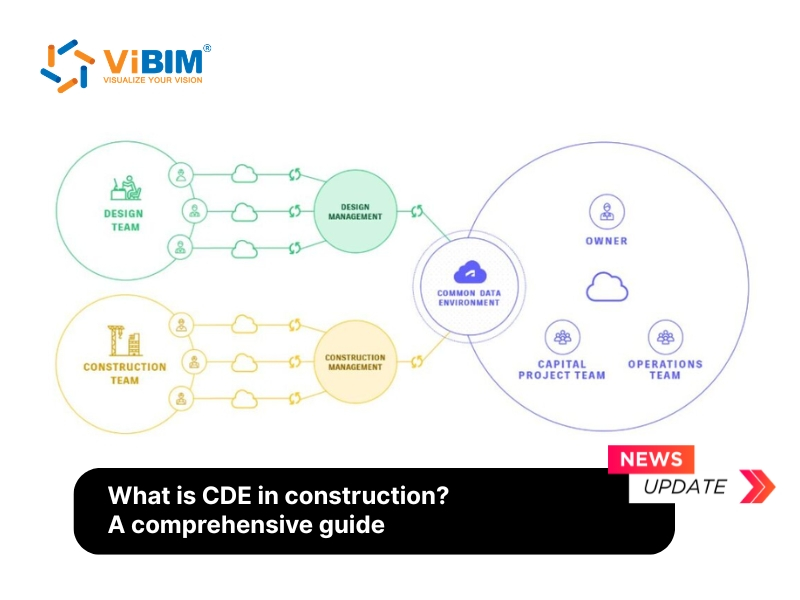
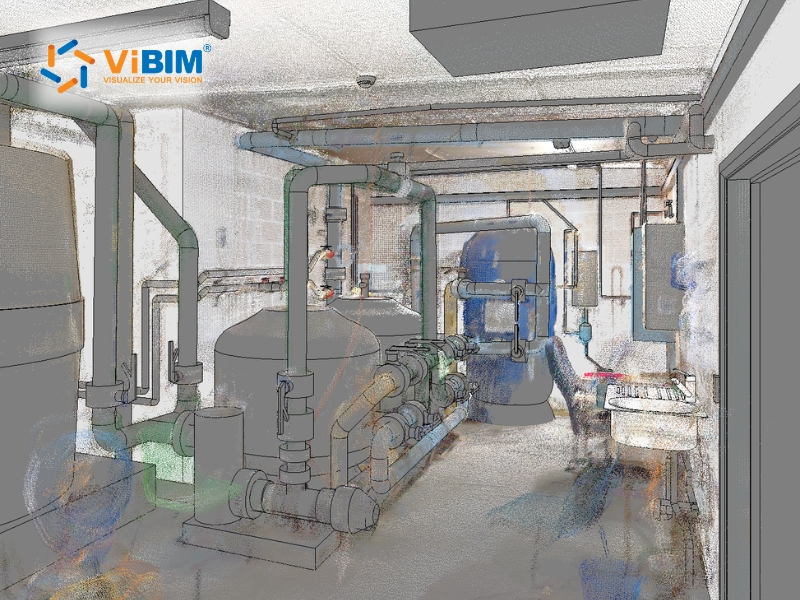
A Common Data Environment (CDE) stores all project data—BIM models, drawings, documents, schedules, and correspondence—in one governed location accessible to every authorized stakeholder. It functions as the project’s single source of truth.
Without a CDE, project information scatters across email accounts, FTP servers, personal drives, and filing cabinets. Drawing revisions become untraceable. Documents disappear between trades. Decisions lack a recorded audit trail. A CDE enforces structured workflows that control how teams create, review, approve, and distribute information—closing those gaps.
CDE platforms deliver 4 core functions. Version control tracks every file revision with timestamps and author records. Access permissions restrict each user to role-specific information. Approval workflows route documents through review gates before publication. Audit trails log every action for accountability and dispute resolution.
Autodesk Construction Cloud, Trimble Connect, Bentley ProjectWise, and Aconex operate as CDE platforms. The ISO 19650 standard (Parts 1 and 2) [8] defines how organizations manage information through a CDE during project delivery and building operations.
The problem in practice: the median construction firm uses 11 separate data environments [6], according to the Deloitte 2025 State of Digital Adoption report. Duplicate data entry costs affect 45% of firms [6]; additional training expenses affect 48%. A single CDE consolidates those fragmented systems and eliminates the duplication.
Reality Capture Technology
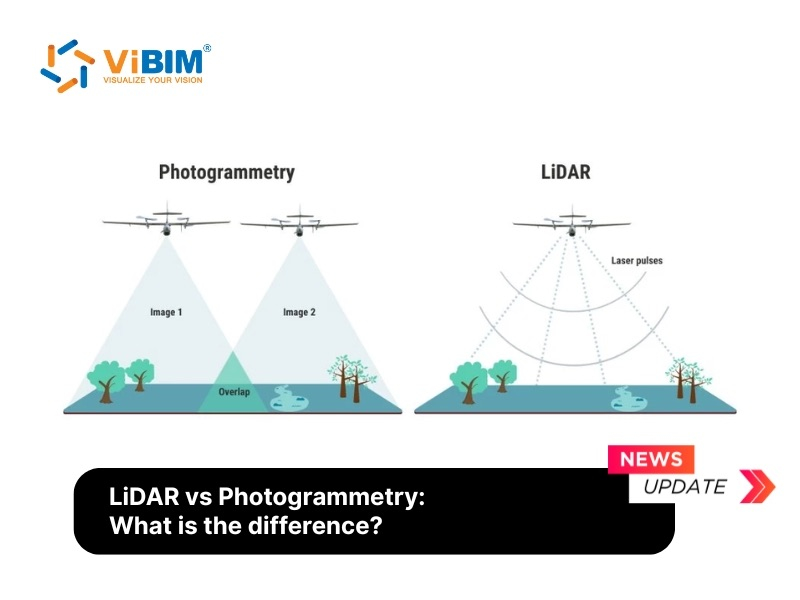
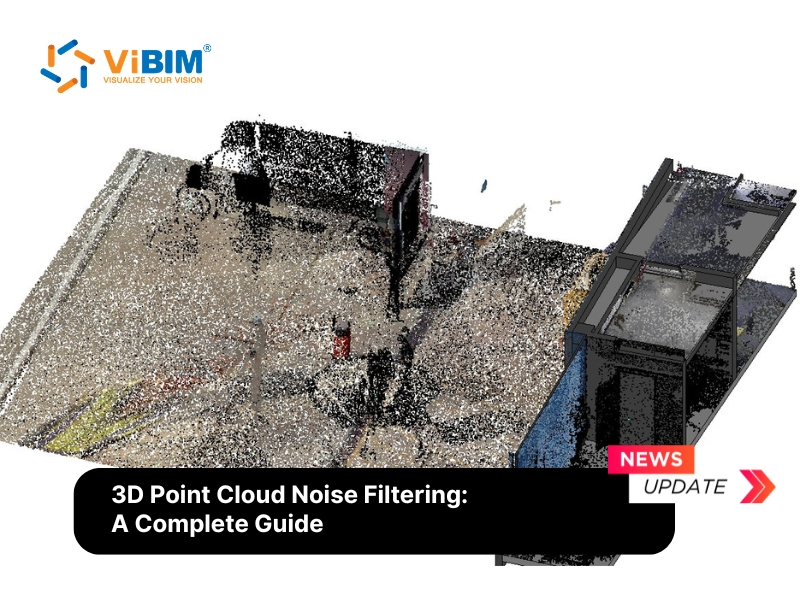
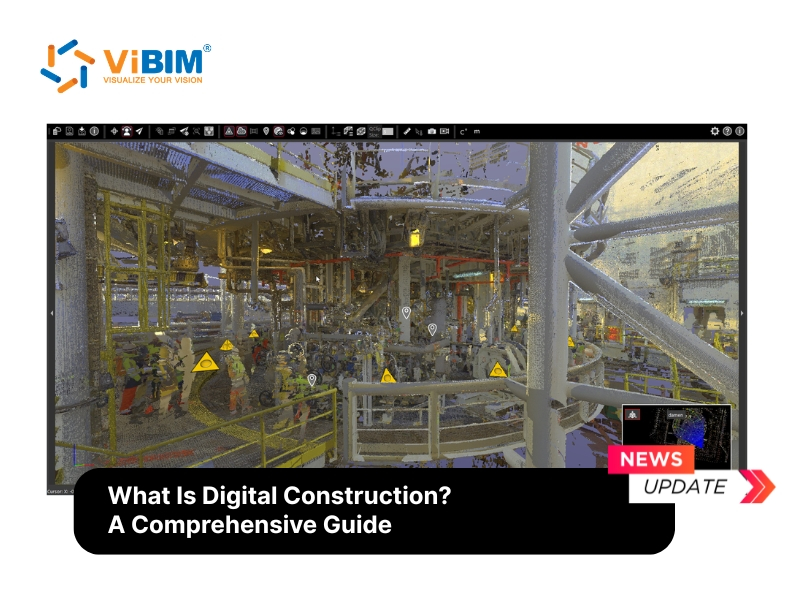
Reality capture technology records physical conditions of a site, building, or infrastructure asset and converts them into a digital format—typically a point cloud, 3D mesh, or photogrammetric model. The two primary methods are laser scanning (LiDAR) and photogrammetry.
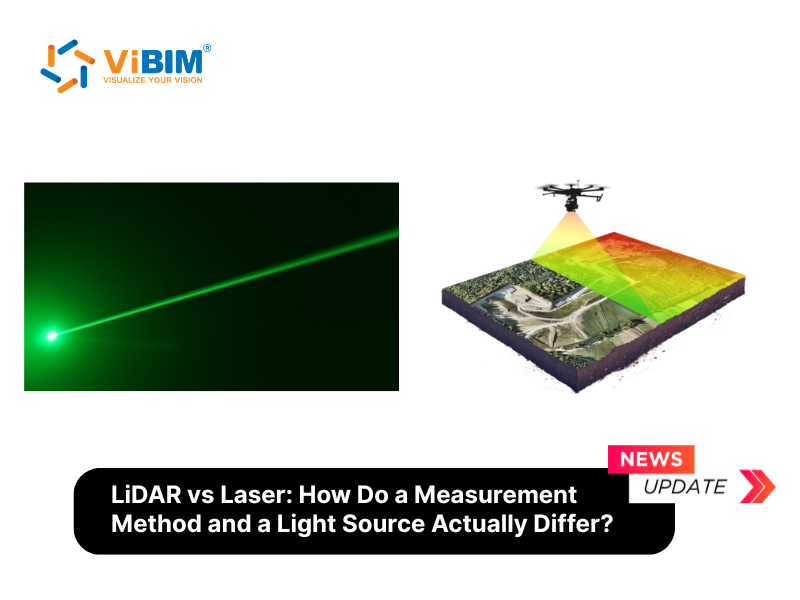
Laser scanners emit millions of light pulses per second and measure the distance to each surface they strike. The result is a point cloud: a dense collection of XYZ coordinates that represents the geometry of whatever was scanned. A terrestrial laser scanner on a tripod captures interior spaces. A mobile scanner mounted on a backpack or handheld device covers large areas faster, though at reduced point density. An airborne LiDAR system on a drone or aircraft captures exterior terrain, rooftops, and building envelopes across wide areas.
Photogrammetry takes overlapping photographs—often from drones—and uses software algorithms to calculate 3D geometry from the differences between image perspectives. This method works well for exterior documentation, site progress monitoring, and topographic surveys.
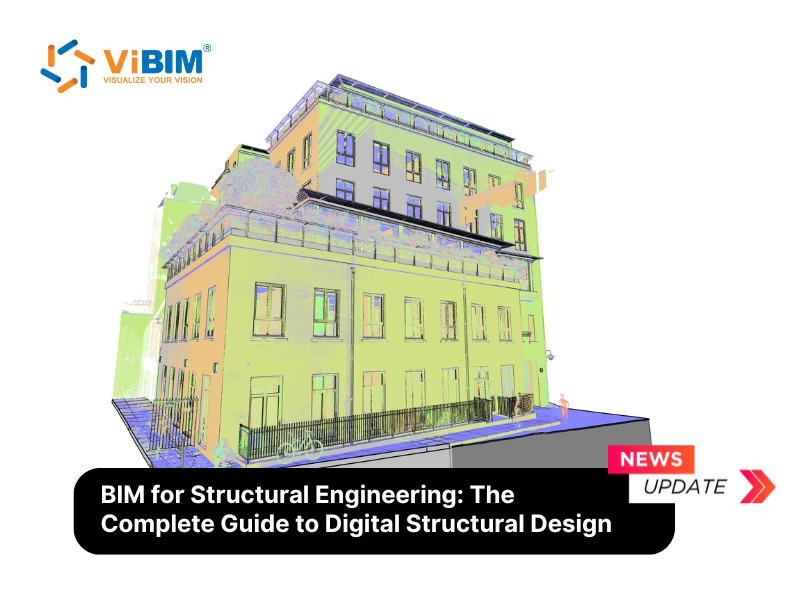
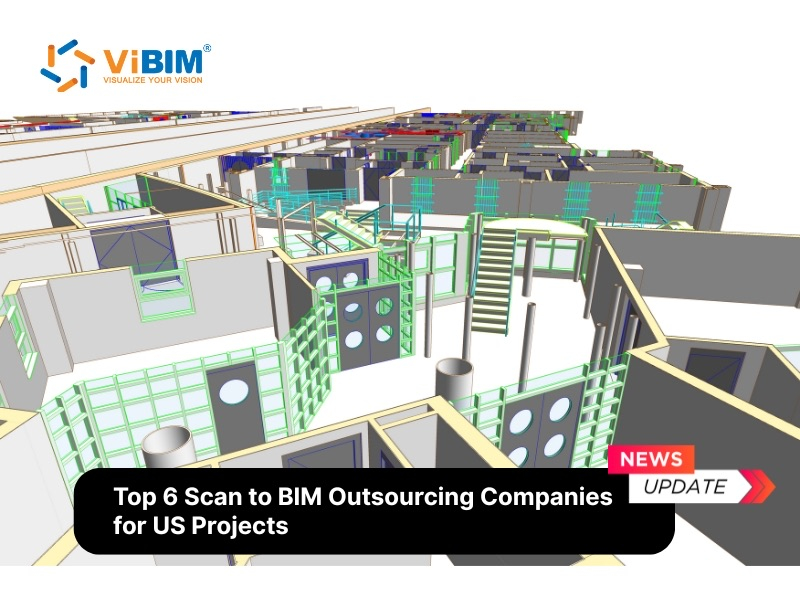
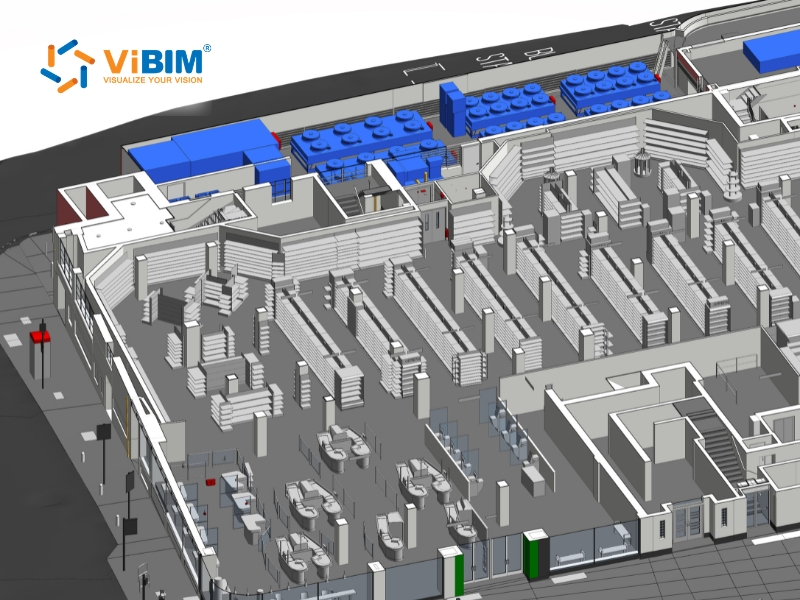
Reality capture connects directly to BIM through the Scan to BIM workflow. In this process, point cloud data from laser scanning becomes the reference for creating accurate BIM models of existing conditions. Trained modelers register the point cloud to the project coordinate system, then build BIM elements—walls, columns, ductwork, structural members—by tracing the scanned geometry in software such as Autodesk Revit.
This workflow matters for renovation, retrofit, and adaptive reuse projects where original drawings either don’t exist or don’t match what’s actually built. Rather than sending a crew to take manual measurements—a slow process prone to human error—a scanning team captures the entire building in hours. The scan data then serves as the definitive reference for design and construction teams working on the renovation.
ViBIM specializes in this exact workflow, delivering expert point cloud to BIM modeling services that convert scan data into accurate digital replicas across architectural, structural, and MEP (mechanical, electrical, plumbing) disciplines at LOD 100 through LOD 500. For scanning companies and AEC firms that capture site conditions but need expert modelers to build the corresponding digital assets, this process is the bridge between physical reality and structured digital information.
Internet of Things (IoT) and Smart Sensors
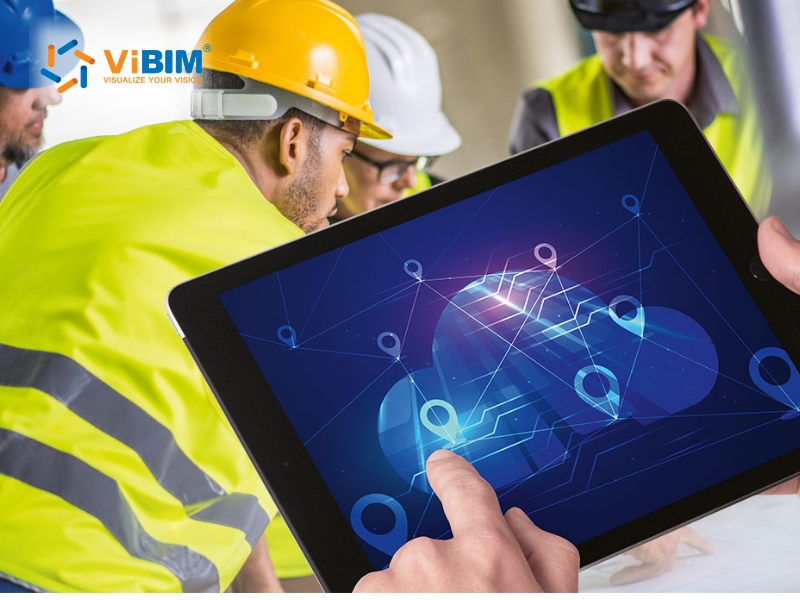
IoT in construction refers to a network of physical devices—sensors, trackers, wearables, and equipment—that collect and transmit data from the jobsite to a central platform without manual input. Each device reports conditions that would otherwise require a person to walk the site, take a reading, and log it by hand.
Sensor types on a modern construction site break into 4 functional categories. Environmental sensors track temperature, humidity, dust levels, and noise to verify that conditions meet curing requirements for concrete or safety thresholds for workers. Structural sensors embedded in formwork, foundations, or steel members measure strain, vibration, and deflection during and after construction. Asset trackers use GPS, RFID, or Bluetooth beacons to locate equipment, materials, and tools across the site—a major time saver on projects that span 10 acres (4 hectares) or more. Wearable sensors on hardhats, vests, or wristbands monitor worker location, heart rate, and proximity to hazardous zones.
The real value appears when sensor data feeds into project management and BIM platforms. A concrete pour sensor reporting internal temperature connects to the curing schedule in the project management tool. An asset tracker flags when a crane sits idle for 3 consecutive days, triggering a reallocation decision. Technology-driven workflows that combine IoT with integrated project management tools show measurable gains in field labor productivity. McKinsey research indicates that firms applying digital workflows across project phases report overall productivity improvements of 14–15% [3], with greater results when IoT sensors, mobile platforms, and project management tools operate as one connected system.
Digital technology adoption across construction continues to accelerate. The Deloitte 2025 State of Digital Adoption survey found that AI and machine learning usage grew from 26% of construction firms in 2023 to 37% in 2025 [6], while IoT sensor deployment followed a similar upward trajectory as firms connected more jobsite devices to centralized platforms. The remaining barrier is not the hardware cost—sensors are cheap. It’s the data management challenge. The median construction firm already runs 11 separate data environments. Adding IoT feeds without a data integration strategy creates noise rather than insight.
Artificial Intelligence and Machine Learning
AI and machine learning (ML) in construction analyze project data to identify patterns, predict outcomes, and automate decisions that previously required manual judgment. By applying advanced BIM analytics, the technology works across scheduling, cost estimation, safety monitoring, design optimization, and quality control to extract actionable insights from model data.
Schedule optimization is one of the clearest applications. ML algorithms process data from completed projects—actual durations, weather impacts, labor productivity rates, material lead times—and generate probability-weighted forecasts for upcoming activities. A general contractor using predictive scheduling can flag a probable 2-week delay before it happens, not after. Predictive models can flag budget risks earlier when applied to cost forecasting, helping project teams course-correct before variances escalate.
Computer vision represents a second major application. Cameras mounted on drones, cranes, or fixed positions capture site images at regular intervals. AI algorithms compare those images to the BIM model and scheduled progress to calculate actual percent complete versus planned. This automated progress tracking eliminates the subjective “90% complete” estimates that projects historically relied on.
Generative AI entered the AEC conversation in 2023–2024 with tools that draft project specifications, generate design options based on constraints, create meeting summaries from recorded discussions, and answer project-specific questions from document sets. These tools don’t replace engineers or project managers. They reduce the hours spent on documentation and information retrieval—tasks that consume a large share of project time.
AI adoption in the AEC sector remains limited. A 2025 global survey of over 1,000 AEC professionals found that only 27% of firms currently use AI for automation, problem-solving, or decision-making [9]. That number is low—but the trajectory tells a different story. Among those early adopters, 94% plan to increase AI investment in the following year, and 68% report saving at least $50,000 through AI-driven workflows [9]. The biggest barrier is not cost. It’s the lack of structured historical data to train models on, combined with complexity in integrating AI into existing project management systems. Firms that track project data consistently are positioned to benefit first.
Digital Twins
A digital twin is a virtual replica of a physical asset—building, bridge, campus, or infrastructure system—that updates in real time using data from sensors, maintenance systems, and building management platforms. The twin mirrors the physical asset’s current state, not just its design intent.
The distinction from BIM matters. A BIM model represents what a building should be at a given point in the design or construction process. A digital twin represents what the building actually is right now—its current energy performance, occupancy patterns, equipment status, and environmental conditions. BIM is the starting point; the digital twin is the living continuation.
Digital twins serve 3 primary functions in the built environment. Performance monitoring tracks energy consumption, HVAC efficiency, and indoor air quality against benchmarks. Predictive maintenance analyzes equipment sensor data to forecast failures before they happen—reducing maintenance costs by up to 30% and equipment downtime by up to 45%, according to PwC analysis [10]. Scenario simulation tests “what if” questions: What happens to energy load if you convert a floor from office use to data center use? How does a fire evacuation route perform at peak occupancy?
The technology requires 3 components working together: a geometric model (typically starting from BIM), a data integration layer that connects live sensor feeds and operational systems, and an analytics engine that processes incoming data against defined rules and thresholds.
Digital twin adoption is growing alongside IoT deployment, since the twin depends on real-time data feeds to maintain accuracy. Without sensors, you have a static model. With sensors but no twin, you have raw data. The twin connects the geometry to the data and makes both actionable.
To determine exactly which technology will maximize your project’s operational efficiency and how to successfully transition from a static design model to a living asset, explore the critical differences in our breakdown of digital twin vs BIM.
Mobile and Cloud-Based Field Platforms
Mobile field platforms deliver current drawings, BIM models, RFIs, punch lists, and daily logs to every crew member’s tablet or smartphone on the jobsite. Cloud synchronization ensures that a revised drawing issued by the architect reaches the field superintendent within minutes—not days later as a paper set.
These platforms close the gap between office decisions and field execution. A subcontractor logs a punch item with a geotagged photo; the project manager reviews it from another city that afternoon. An inspector completes a quality checklist on a tablet; the report auto-populates the project dashboard. Each exchange that once required a phone call, a printout, or a walk to the trailer now happens through the platform.
Autodesk Construction Cloud (ACC), Procore, Fieldwire, and Dalux Field lead this market segment. Their core functions cover document management, 3D model viewing, issue tracking, daily reporting, and quality workflows. ACC and Procore integrate with BIM models directly—field workers tap a room on the floor plan to view the 3D geometry with material specs, equipment tags, and installation sequences.
Field mobility accelerates RFI response cycles and reduces rework from outdated drawings. Project teams using cloud-based field platforms report faster issue resolution because every stakeholder works from the same current document set—eliminating the version conflicts that drive field errors. Closeout documentation compresses from weeks to days when punch lists, inspections, and commissioning records flow through a single digital system.
Augmented reality (AR) and the integration of BIM and VR (virtual reality) extend these platforms further. Devices such as Microsoft HoloLens or a smartphone camera overlay digital data onto the physical space—revealing ductwork, conduit, and piping routes behind finished walls before a crew cuts into them.
How Digital Construction Transforms the Building Lifecycle
Digital construction reshapes how buildings move through 5 lifecycle phases: planning, design, preconstruction, field execution, and operations. Each phase generates data that carries forward to the next, creating a continuous information chain from concept through decades of facility use.
Planning and feasibility starts with site analysis using GIS data, drone surveys, and existing condition scans. The project team builds an initial BIM model at LOD 100–200 to test massing options, evaluate site constraints, and estimate preliminary costs. Reality capture of surrounding structures and terrain feeds into the model early—before design decisions get locked in.
Design development uses BIM as the primary authoring environment. Architects, structural engineers, and MEP designers work in coordinated models. The CDE manages revisions and review cycles. Automated clash detection identifies conflicts between disciplines—a duct running through a structural beam, a pipe occupying the same space as an electrical conduit—before anyone orders materials. This single capability routinely prevents hundreds of field conflicts per project.
Preconstruction adds schedule and cost data to the model. 4D simulation links construction activities to model elements so the team can visualize the build sequence week by week. 5D integration ties cost estimates to model quantities, allowing the team to see the budget impact of design alternatives in real time. Prefabrication planning uses model geometry to generate shop drawings and CNC files for components built off-site—where conditions are controlled and material waste drops significantly compared to field-built assemblies.
Field execution connects the model to the physical jobsite. Mobile platforms deliver current information to crews. IoT sensors monitor conditions. Drones capture progress photography. Laser scanning compares as-built conditions to the design model—verifying that a structural slab is within tolerance before the next trade mobilizes. These data streams converge in the CDE, giving the project manager a live dashboard of scope, schedule, cost, and quality performance.
Operations and facility management is where the data investment pays off over decades. The as-built BIM model becomes the owner’s digital asset record, containing every material specification, equipment serial number, warranty date, and maintenance schedule. Digital twins extend this by adding live performance data. A facility manager queries the model to find the exact valve that controls a specific HVAC zone—instead of searching through boxes of paper closeout documents.
The lifecycle data loop closes when operational data—actual energy use, maintenance patterns, space utilization—feeds back into the design of future projects. Buildings designed with performance data from 10 previous projects perform better than buildings designed from assumptions.
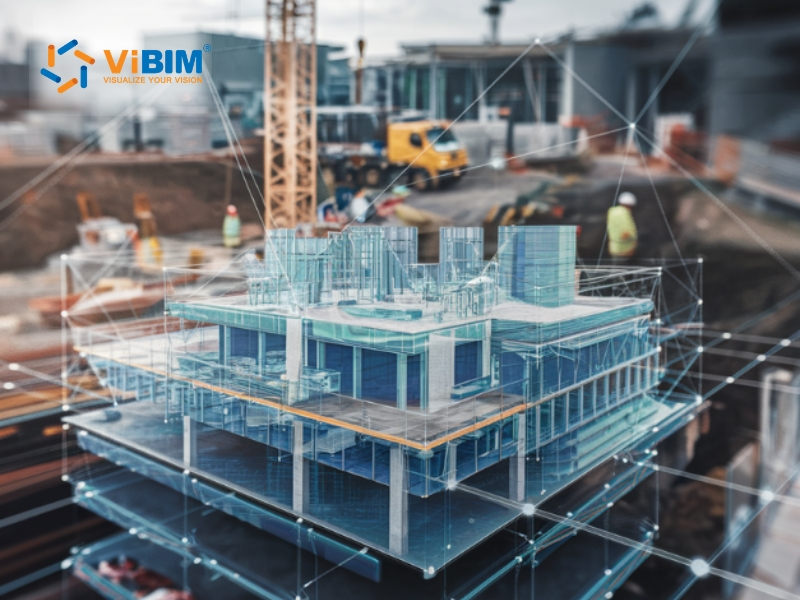
Benefits of Digital Construction
Construction firms that adopt digital workflows report measurable gains across 5 performance areas: productivity, cost, schedule, safety, and quality.
- Higher Productivity Through Connected Workflows: Field labor productivity increases 14–15% when firms apply digital workflows across project phases, according to McKinsey Global Institute research [3]. Gains compound when IoT sensors, mobile platforms, and integrated project management tools operate together—each closing a different information gap that slows field crews.The sources of improvement: less time searching for information, fewer errors from outdated documents, and reduced rework from coordination gaps.
- Lower Project Costs: Project budgets shrink 4–6% through 4 mechanisms [3]. Automated quantity takeoffs replace manual counting. Clash detection catches conflicts during design—when a fix costs 1x—instead of during construction, when the same fix costs 5–10x more. BIM-enabled prefabrication reduces material waste. Predictive analytics flag cost overruns early enough to course-correct. On a $100 million project, a 5% savings equals $5 million.
- Compressed Schedules With Fewer Surprises: 4D simulation identifies sequence conflicts before crews mobilize. Real-time progress monitoring catches delays within days, not weeks. BIM-driven coordination compresses project timelines on renovation and MEP-heavy projects where trade overlap creates the most risk. The result: tighter forecast accuracy and fewer missed milestones.
- Fewer Safety Incidents on Connected Jobsites: Connected jobsites report fewer safety incidents through real-time environmental monitoring, proximity alerts near openings and heavy equipment, and wearable sensors that track worker fatigue patterns. The Deloitte 2025 State of Digital Adoption survey found that firms with higher levels of digital maturity experience a 50% reduction in the likelihood of safety incidents compared to less digitally mature peers [6]. Predictive analytics detect risk correlations—overtime hours correlating with near-misses, for example—and trigger interventions before an injury occurs.
- Millimeter-Level Quality Verification: Digital workflows catch errors during design rather than installation. Model-based coordination identifies hundreds of clashes per project before construction begins. Point cloud-to-model deviation analysis verifies that as-built conditions match design intent within ±6 mm (±0.25 in) for structural elements. Digital punch lists with geotagged photo documentation create an auditable record that paper checklists cannot replicate.
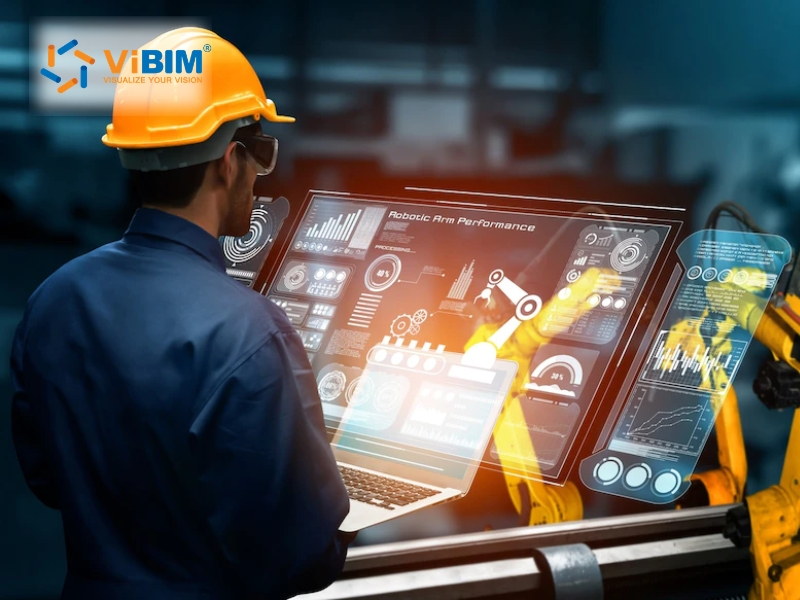
Common Challenges in Digital Construction Adoption
Digital construction adoption stalls most often at three friction points: people, process, and technology readiness.
- Skills gaps remain the top barrier: A 2025 survey of 520 AEC professionals found that insufficient training was the primary obstacle across every digital technology category except AR/VR. The gap affects both sides of the workflow—scanning teams that capture data and design teams that consume BIM models need fluency in overlapping tools and standards. Firms that lack trained modelers often utilize Revit Modeling Outsourcing Services to convert point cloud data into structured BIM deliverables, solving a bottleneck that hardware investment alone cannot.
- Unclear scope definitions create friction between project stakeholders: Digital workflows require upfront agreement on deliverable specifications—LOD requirements, file formats, coordinate systems, naming conventions. When a building owner requests “a BIM model” without defining whether that means LOD 200 architectural shells or LOD 400 fabrication-ready MEP systems, the resulting misalignment generates rework and erodes trust in the process. Standardized frameworks like LOD specifications and ISO 19650 exist, but inconsistent adoption across firms and markets limits their effectiveness.
- Interoperability between platforms slows data flow: Point cloud files captured in proprietary scanner formats must translate cleanly into BIM authoring tools like Revit. Design models need to exchange through open standards such as IFC with analysis, coordination, and facility management software. Each translation step risks data loss or misinterpretation. Until the full project team—from scanner operator to facility manager—works within connected data environments, digital workflows deliver fragmented value rather than end-to-end efficiency.
Vietnam BIM Consultancy and Technology Application Company Limited (ViBIM)
- Address: 10th floor, CIT Building, No 6, Alley 15, Duy Tan street, Cau Giay ward, Hanoi, Vietnam
- Phone: +84 944 798 298
- Email: info@vibim.com.vn
References
- [1] McKinsey & Company, “The construction productivity imperative,” June 2015. Available: https://www.mckinsey.com/capabilities/operations/our-insights/the-construction-productivity-imperative
- [2] McKinsey Global Institute, “Reinventing construction: A route to higher productivity,” February 2017. Available: https://www.mckinsey.com/capabilities/operations/our-insights/reinventing-construction-through-a-productivity-revolution
- [3] McKinsey & Company, “Decoding digital transformation in construction,” August 2019. Available: https://www.mckinsey.com/capabilities/operations/our-insights/decoding-digital-transformation-in-construction
- [4] McKinsey & Company, “Imagining construction’s digital future,” June 2016. Available: https://www.mckinsey.com/capabilities/operations/our-insights/imagining-constructions-digital-future
- [5] McKinsey & Company, “From start-up to scale-up: Accelerating growth in construction technology,” May 2023. Available: https://www.mckinsey.com/industries/private-capital/our-insights/from-start-up-to-scale-up-accelerating-growth-in-construction-technology
- [6] Deloitte Access Economics and Autodesk, “State of Digital Adoption in the Construction Industry 2025,” February 2025. Based on a survey of almost 900 businesses across Asia Pacific. Available: https://www.deloitte.com/au/en/services/economics/analysis/state-digital-adoption-construction-industry.html
- [7] Vectorworks, “Digital technology trends in the AEC industry 2025,” January 2025. Based on a survey of 520 AEC professionals across 49 countries. Available: https://www.vectorworks.net/en-US/newsroom/aec-trends-2025-report
- [8] International Organization for Standardization, ISO 19650-1:2018 and ISO 19650-2:2018, “Organization and digitization of information about buildings and civil engineering works, including building information modelling (BIM) — Information management using building information modelling.”
- [9] Bluebeam / Nemetschek Group, “2026 Building the Future: Bluebeam AEC Technology Outlook,” October 2025. Based on a global survey of over 1,000 AEC professionals across the US, UK, France, Germany, and Australia. Available: https://www.bluebeam.com
- [10] PwC, “Predictive Maintenance 4.0 – Beyond the Hype: PdM delivers results,” 2020. Based on a study of 268 companies across Belgium, Germany, and the Netherlands.
- [11] McKinsey & Company, “Delivering on construction productivity is no longer optional,” August 2024. Available: https://www.mckinsey.com/capabilities/operations/our-insights/delivering-on-construction-productivity-is-no-longer-optional