In the architecture, engineering, and construction (AEC) industry, the terms BIM and CAD are often used, but they represent fundamentally different approaches to project design and management. The fundamental difference between them is a shift in focus from drawing to information. While CAD is a tool used to create 2D and 3D geometric representations, BIM is an intelligent process for creating and managing a comprehensive digital model of a facility throughout its entire lifecycle. Essentially, CAD creates a digital version of a paper blueprint, whereas BIM creates a virtual, data-rich twin of the actual building.
This article will explore the key distinctions between BIM vs. CAD and highlight the primary advantages of using BIM for modern construction projects.

What is CAD?
CAD is well-known software used to create precise 2D and 3D drawings. Emerging in the 1980s, AutoCAD revolutionized the industry by replacing the manual drawing board with a digital equivalent, becoming the indispensable tool for architects and engineers.
The importance of CAD was its ability to dramatically improve the accuracy and efficiency of creating construction documents compared to hand-drawing. It became the digital backbone for design, allowing professionals to draft, edit, and share plans with greater speed. However, while essential, CAD’s function is primarily that of a sophisticated drawing tool. The resulting models are geometric representations, lacking the deep, integrated data and collaborative capabilities needed for the complex, multi-disciplinary demands of modern construction projects.
This tool is used by a wide range of professionals, including architects for creating floor plans and elevations, engineers for designing structural and MEP (mechanical, electrical, plumbing) systems, and drafters for producing detailed technical drawings.
What is BIM?
Building Information Modeling (BIM) is the natural evolution of CAD, a process-driven methodology that addresses the limitations of traditional drafting. While CAD software like AutoCAD focuses on creating drawings, BIM, often implemented through advanced software like Autodesk Revit, is about creating a building’s intelligent digital twin. BIM is an object-oriented development process that uses a 3D model not just for visualization, but as a comprehensive database of information for the entire project lifecycle.
Unlike CAD, where a wall is just a set of lines, a wall in a BIM model is an intelligent object. It “knows” what it is, what it’s made of, its cost, its fire rating, and how it connects to the floor, ceiling, and adjacent walls. This embedded data is the essence of BIM. Its importance lies in two core principles: collaboration and lifecycle management. All project stakeholders can work concurrently on a single, shared, and coordinated model. This integrated approach minimizes errors, improves decision-making, and supports the project from initial design and construction all the way through to facility operations and maintenance.

What are the similarities between CAD/BIM?
While fundamentally different, BIM and CAD share some common ground, primarily in their application within the AEC industry.
- 3D Modeling: Both CAD and BIM technologies enable the creation of three-dimensional models that not only represent the geometric attributes of building components, such as shape, size, and spatial location, but also allow stakeholders to visualize the project in detail before actual construction begins.
- AEC Industry Focus: Both BIM and CAD are core technologies used by architects, engineers, and construction professionals for designing and documenting building projects.
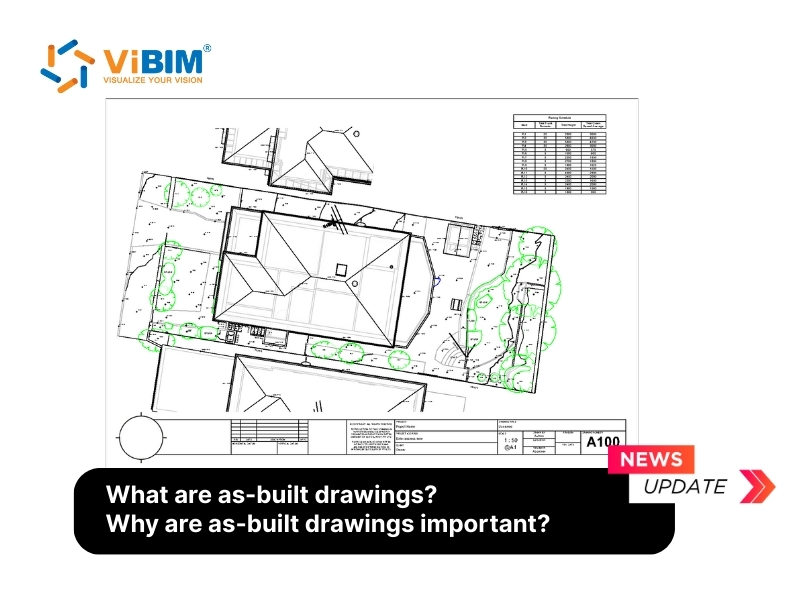
- Digital Documentation: They both produce digital files that form the basis for construction documents, replacing the need for paper-based blueprints and facilitating easier sharing and storage of project information.
- Cloud Computing: While BIM platforms are natively cloud-enabled for multi-disciplinary collaboration, CAD solutions such as AutoCAD have also introduced web-based viewers (e.g., AutoCAD Web) for easier online access and file sharing, but they do not offer the same level of integrated collaboration as BIM.
- Shared File Formats: Share workflow compatibility through the DWG file format to enable data exchange and collaboration across disciplines in AEC projects.
What is the difference between BIM and CAD?
The differences between BIM and CAD are significant, extending beyond simple geometry to encompass data, collaboration, and project lifecycle management. Another key distinction lies in their modeling approach: CAD relies on line-by-line drawings, while BIM leverages parametric modeling to create intelligent and data-rich 3D representations.
For a clearer comparison, scroll down to the BIM vs CAD comparison table below.
| Factor | BIM (Building Information Modeling) | CAD (Computer-Aided Design) |
| Dimensionality and Modeling | An intelligent, object-oriented 3D modeling process (extending to 4D, 5D, etc.). Each model element is an object with data and relationships. | Primarily 2D drafting with 3D modeling capabilities. Models are geometric representations made of lines, arcs, and surfaces without inherent intelligence. |
| Data Integration | Integrates a wide range of information such as materials, operational logistics, and maintenance data, embedding rich details within the model. | Concentrates on geometric aspects, capturing details about shapes, dimensions, and spatial placement. |
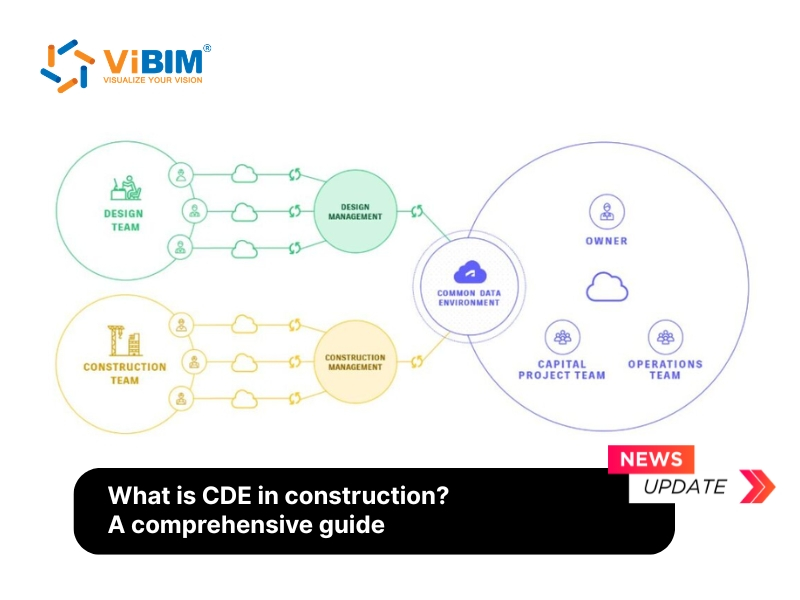
| Collaboration Features | Facilitates real-time, simultaneous collaboration. All disciplines can work on a federated or central model, allowing for immediate clash detection and improved coordination. | Collaboration is typically linear and file-based. Different disciplines work on separate files, which are then referenced or overlaid, leading to coordination challenges. |
In many cases, BIM software can incorporate CAD data, so they are not mutually exclusive. Consequently, many firms invest in CAD to BIM conversion to modernize legacy designs. However, the industry is increasingly moving towards BIM for its ability to improve efficiency, reduce costs, and enhance collaboration on complex projects.
What are the Main Advantages of BIM over CAD in Construction?
The main advantages of BIM over CAD in construction lie in its ability to support integrated collaboration, clash detection, data-rich modeling, and full lifecycle management. These features help improve project efficiency, reduce costs, and deliver higher-quality outcomes. In contrast, CAD remains primarily focused on 2D and 3D drafting.
| Factor | BIM | CAD |
| Efficiency | Changes made in one view are automatically propagated across the entire model and all associated documents, saving time and ensuring consistency. | Changes require manual updates across multiple drawings, which is time-consuming and prone to error. |
| Collaboration | A central model acts as a single source of truth, enabling seamless collaboration and automated clash detection, resolving conflicts before construction begins. | Limited to sharing files. Coordination is a manual process of comparing drawings, often leading to clashes discovered on-site. |
| Cost Estimation | Automated quantity takeoffs and cost estimations (5D BIM) are generated directly from the model, providing more accurate and dynamic cost feedback during design. | Quantity takeoffs are a manual, often tedious process performed from 2D drawings, with a higher potential for inaccuracies. |
| Visualization | Offers realistic, data-rich visualizations and simulations that allow for analysis of lighting, energy performance, and construction sequencing (4D BIM). | Provides 3D views, but they are purely geometric and lack rich data. |
| Sustainability | Integrates with analysis tools to simulate energy consumption, solar impact, and other sustainability metrics early in the design process, enabling more informed decisions. | Analyzing a building’s environmental performance is a separate, complex task requiring manual data input into specialized software. |
For projects that need external production capacity after choosing a BIM workflow, Revit model outsourcing can provide coordinated authoring models for design, documentation, and downstream collaboration.
When to use BIM vs. CAD?
The choice between BIM and CAD ultimately depends on the project’s complexity, scope, and collaborative requirements. Neither technology makes the other obsolete; they simply serve different purposes and are suited for different types of tasks.
When to use BIM?
BIM is the superior choice for projects where collaboration, lifecycle data, and complex coordination are critical.
- Ideal for collaborative 3D model-based coordination across stakeholders.
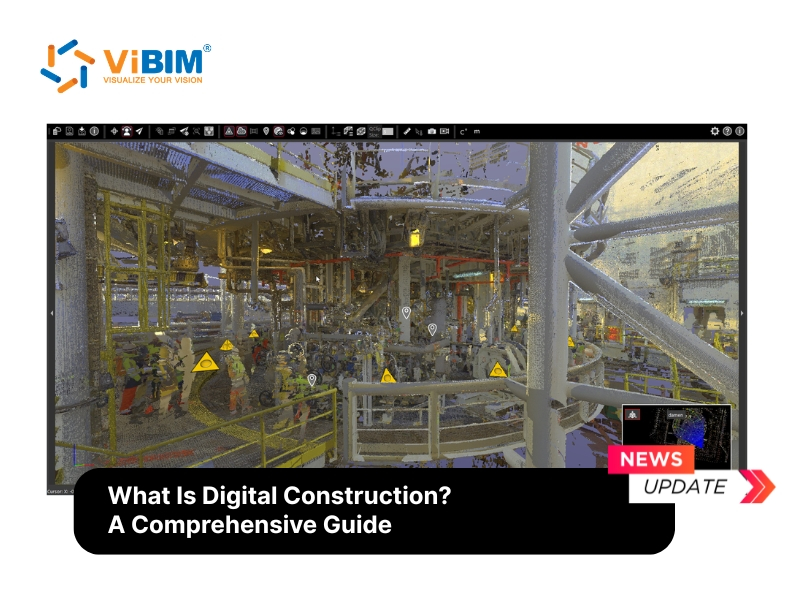
- Suitable when integrating real-world building performance data into models, often utilizing point cloud to BIM workflows.
- Effective for managing complete building lifecycles, from design to maintenance.
- Useful for visualizing and simulating building performance (e.g., energy, space utilization).
- Supports integration with digital twin platforms and facility management systems.
When to use CAD?
CAD remains a highly effective and efficient tool for simpler, more straightforward tasks and projects.
- Best for 2D drafting of early design concepts and schematics.
- Appropriate for generating precise technical drawings without 3D components.
- Efficient for creating or modifying detailed object-specific elements.
- Suitable when focusing on individual parts or assemblies requiring high precision.
- Practical for projects that don’t need 3D modeling or complex data integration.
In conclusion, while CAD provides the foundational tools for digital drafting, BIM represents a paradigm shift towards an integrated, data-driven process that enhances collaboration, efficiency, and decision-making across the entire project lifecycle. Understanding the distinct strengths of both BIM vs CAD allows AEC professionals to select the right approach for the right job, ensuring optimal project outcomes.