Implementing Building Information Modeling brings many advantages, but successful implementation requires careful planning, strategic execution, and avoiding common pitfalls. Many organizations stumble during their BIM journey, leading to frustration, wasted resources, and unrealized benefits. Understanding these potential mistakes is the first step toward a smoother, more effective BIM adoption. This article outlines 8 critical mistakes often made during BIM implementation and provides actionable solutions to help your team navigate the process successfully:
- Missing or incomplete BIM Execution Plan (BEP/BxP)
- Seeing BIM as only a 3D model
- Disorganized data and information handling
- Incorrect Level of Detail (overmodeling or undermodeling)
- Delaying clash detection checks
- Using incompatible hardware or a weak hosting setup
- Uncontrolled use of 2D or external files
- Skipping model quality checks and validation
Read this full article from ViBIM to explore each mistake in depth and discover practical ways to overcome them for a smoother, more successful BIM implementation.

Missing or incomplete BIM Execution Plan (BEP/BxP)
One of the most frequent and damaging mistakes is starting a BIM project without a comprehensive BIM Execution Plan (BEP or BxP) or having one that’s poorly defined. A BEP acts as the roadmap for the project, outlining goals, roles, responsibilities, standards, deliverables, and collaboration protocols. Without this guiding document, teams often lack direction, leading to inconsistent modeling practices, data mismanagement, and unmet expectations.
The best way to solve this problem is to establish a BEP for every project, regardless of size.
- Define objectives that all stakeholders can clearly understand and align with.
- Assign responsibilities and describe how each role contributes to the shared model.
- Set data exchange formats, software platforms, and model naming rules based on international BIM standards.
- Keep the BEP flexible by updating it whenever project conditions change.
- Involve all participants during its preparation to build shared ownership and practical use.
Seeing BIM as only a 3D model
A fundamental misunderstanding is viewing BIM solely as a tool for creating 3D visualizations. To truly grasp the BIM meaning in construction, one must realize that while 3D modeling is a core component, the true power of BIM lies in the information embedded within the model elements. Treating BIM as just a 3D CAD replacement overlooks its potential for data analysis, clash detection, quantity takeoffs, scheduling (4D), cost estimation (5D), and facility management (6D). This limited perspective prevents teams from leveraging the full value BIM offers throughout the project lifecycle.
A more effective approach is to redefine BIM as a process centered on information management.
- Add accurate, useful data to each model element, including material details, cost data, and maintenance plans.
- Expand the model from 3D to include 4D (time), 5D (cost), and 6D (operations and maintenance).
- Match the Level of Development (LOD) to the project phase and goals to ensure consistent data accuracy.
- Promote collaboration across all disciplines to make the model a shared source of truth.
When internal teams cannot scale Revit production without losing control of project standards, professional Revit BIM outsourcing services can add modeling capacity while keeping deliverables aligned with the BEP, required LOD, and information structure.

Disorganized data and information handling
Many BIM projects struggle with poor information management that starts early and grows worse over time. Scattered files, inconsistent naming, disorganized model libraries, missing version control, and unclear data exchange protocols all lead to confusion about which information is correct. When these issues pile up, data becomes unstructured, decisions take longer, and trust among team members weakens, making the whole BIM process less efficient and harder to manage.
A structured data management system must be the foundation of every BIM project.
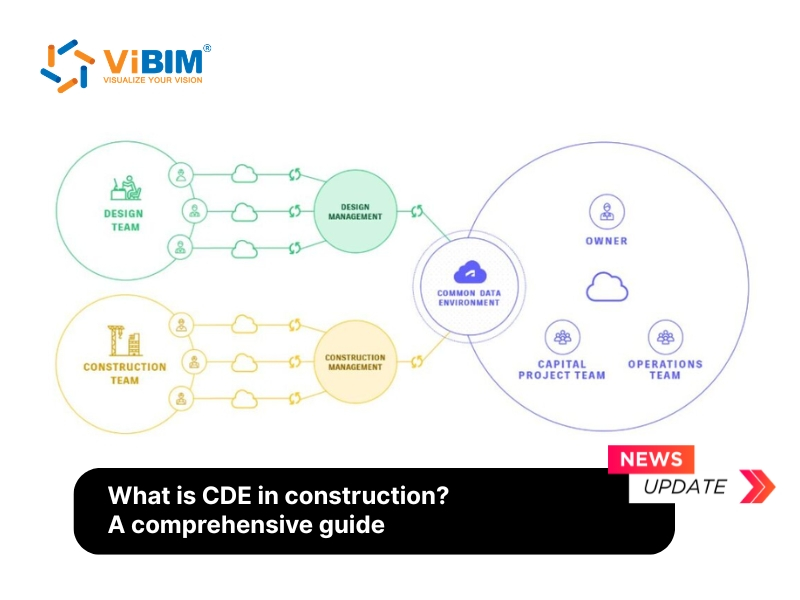
- Adopt a cloud-based CDE, such as Autodesk Construction Cloud or BIM 360, to centralize and synchronize all project information.
- Apply strict version control rules, including file naming, approval processes, and update logs.
- Standardize data exchange formats (like IFC or COBie) to ensure smooth interoperability.
Incorrect Level of Detail (overmodeling or undermodeling)
Overmodeling involves adding excessive detail too early in the project, wasting time and creating overly large, unwieldy files. Conversely, undermodeling means insufficient detail is included for necessary tasks like clash detection or accurate quantity takeoffs, leading to inaccuracies and rework later. Both extremes hinder efficiency.
These problems often arise when new modelers assume that more detail means better quality, or when teams rush to meet deadlines and end up simplifying too much. The lack of a clear modeling scope in the BIM Execution Plan also allows each discipline to model according to its own understanding, leading to inconsistencies and reducing overall project efficiency.
The solution lies in keeping the model aligned with the project phase and purpose.
- Clearly define the required LOD for different model elements at each project stage in the BEP.
- Align the LOD with the specific BIM uses planned for that phase, such as requiring LOD 300 in BIM for precise coordination of structural and MEP components.
For example, early design stages might require LOD 200, while construction documentation might necessitate LOD 300 or 350 for specific components. Ensure the team understands and adheres to these requirements.
For existing-building projects, converting point cloud data into an as-built Revit model requires LOD to be defined before production, so professional Scan to BIM services can apply that scope consistently and avoid both overmodeling and missing coordination-critical detail.

Delaying clash detection checks
Delaying performing clash detection is a critical mistake. Clash detection identifies geometric conflicts between different building systems (e.g., HVAC ducts hitting structural beams) within the BIM model. Delaying these checks until late in the design phase or during construction means conflicts are discovered when they are much harder and more expensive to resolve, potentially causing significant delays and cost overruns.
The most effective way to solve this is to make clash detection an ongoing, structured part of the workflow.
- Integrate coordination schedules directly into the BIM Execution Plan (BEP) to define timing, scope, and responsibilities for clash tests.
- Use dedicated tools such as Navisworks, Solibri, or ReviCheck to automate conflict detection and simplify conflict visualization.
- Maintain a regular review cycle at key design stages so all teams address issues together.
- Keep a detailed log of clashes and their resolutions to track accountability and prevent repeated errors.

Using incompatible hardware or a weak hosting setup
Using unsuitable hardware can seriously affect BIM performance and workflow stability. Outdated computers or unstable local servers cause models to lag, lead to software crashes, and interrupt collaboration, slowing down the entire project.
This issue often comes from a weak understanding of how BIM software depends on system hardware. Each tool has its own performance requirements, such as Revit relying on strong single-core CPUs or Archicad benefiting from multi-core systems, so mismatched hardware easily leads to inefficiency and wasted time.
The practical way to avoid this issue is to align hardware investment and hosting setup with project needs from the beginning.
- Evaluate the technical requirements of the chosen software, including CPU usage, RAM, and GPU compatibility.
- Use workstation-grade graphics cards certified for BIM software, not gaming models.
- Maintain a balanced system setup with a fast processor (8–12 cores), 32–64 GB RAM, SSD storage, and a DirectX 11 or higher GPU for stability.
- Adopt a centralized hosting solution through cloud-based platforms or a Common Data Environment (CDE) for shared access and secure storage.
Uncontrolled use of 2D or external files
Poor coordination often leads to another hidden issue in BIM: the careless use of 2D or external files inside the model. Imported DWGs, PDFs, or images can improve accuracy, but when added without checking or organizing, they can cause oversized models, slow performance, and even data corruption. Weak file management practices and a poor understanding of compatibility rules often create this problem, as teams embed drawings or images rather than linking to them.
The right approach is to manage external content methodically so that the model remains accurate and lightweight.
- Check each file’s size, layers, and attributes before linking it to prevent performance issues.
- Verify compatibility between the external file and the BIM software version in use to avoid translation conflicts.
- Use linking rather than importing to keep the main model manageable and stable.
- Clean external drawings by removing unnecessary elements before referencing them.
- Keep a shared storage folder for all linked content to maintain organization and prevent path errors during collaboration.
Skipping model quality checks and validation
Skipping model quality checks often leads to serious problems in BIM projects. When models are created without proper review for accuracy, constructability, and compliance with standards, small errors, such as misplaced or duplicated elements, gradually accumulate, causing delays, additional costs, and mismatches between design and construction.
This issue usually stems from overreliance on automation and weak quality control procedures. Teams often believe that BIM software automatically ensures precision, but without consistent human validation, the model quickly loses reliability and becomes difficult to manage.
The right solution is to adopt a clear and consistent quality assurance structure that guides every project phase.
- Apply staged reviews, such as three-level checks, to verify design accuracy, constructability, and compliance with project standards.
- Regularly validate parameters like duplication, geometry accuracy, and discipline coordination.
How to Ensure Success in Your Next Scan to BIM Project?
Avoiding common BIM implementation pitfalls requires a partner with proven expertise and optimized workflows. ViBIM provides specialized Scan to BIM services that address these challenges directly through high-accuracy modeling and standardized quality control.
When you partner with ViBIM, you leverage specific competitive advantages designed to keep your projects on track:
- Exceptional Reliability: We maintain a 99% on-time delivery record, ensuring your project schedules remain undisturbed.
- Superior Efficiency: Our optimized workflows and advanced technology deliver turnaround times up to 30% faster than industry standards.
- High Precision Modeling: Every Revit model undergoes a rigorous two-layer independent quality check (QC) to ensure maximum accuracy and reliability against point cloud data.
- Responsive Communication: Your inquiries receive prompt attention, with emails typically addressed in under 1 hour during business hours.
- Expert Production Team: All ViBIM modelers possess degrees in Architecture or Civil Engineering, ensuring professional-grade output for complex building types.
Ready to eliminate implementation errors and enhance your project quality? By utilizing professional Revit BIM outsourcing services, you can ensure your models are built to the highest standards. Contact ViBIM today to discuss your requirements or initiate a complimentary trial project to experience our technical capabilities firsthand.
After examining the common pitfalls across all stages of BIM adoption, the discussion on mistakes in BIM implementation reveals how each issue, from poor collaboration and undefined roles to weak quality control and change management, directly affects project accuracy and efficiency. Each section in this article connects these recurring challenges and provides practical solutions that strengthen communication, maintain data integrity, and improve coordination between disciplines. By addressing these problems systematically, we create a more consistent and productive BIM workflow across project phases.