A construction drawing is a scaled technical document that communicates graphic and written instructions for building a structure. It records dimensions, materials, spatial relationships, and assembly sequences for every building component — from foundation footings to roof parapets.
Construction drawings split into two groups. Discipline-based drawings — civil, architectural, structural, MEP, and fire protection — are organized by the engineering trade that produces them. Phase-based drawings — shop drawings and as-built records — are defined by when they enter the project timeline. This two-axis classification gives project teams a clear framework for locating, producing, and coordinating the right document at the right stage.
The sections below walk through each type: what it contains, who creates it, and where it fits in the drawing set. The guide also covers how drawings are created today — including BIM and Scan to BIM workflows — and how to read them.

What Is a Construction Drawing?
A construction drawing is a scaled technical document that uses standardized graphic conventions to describe what a structure looks like, what it’s made of, and how to build it. Every line, symbol, dimension, and annotation follows industry conventions that architects, engineers, contractors, and building officials all read the same way.
The term “construction drawings” is an umbrella. It covers all technical drawings tied to a project — from early design sketches through permit sets, shop drawings, and post-construction as-built records. “Construction Documents,” often shortened to CDs, is narrower: it refers to the finalized package of drawings and written specifications issued after Design Development, and it functions as a legal contract instrument under the AIA framework. “Working drawings” and “blueprints” are legacy terms from the hand-drafting era. Both still appear in conversation and both mean the same thing.
This guide uses “construction drawings” in its broadest sense — covering documents created before, during, and after construction.
A drawing set organizes sheets by discipline. Each sheet carries a prefix letter that identifies its origin: C for civil, A for architectural, S for structural, M for mechanical, E for electrical, P for plumbing, FP for fire protection. A sheet numbered A-201 is the first elevation sheet in the architectural set. S-301 is the first detail sheet in the structural set. This numbering convention — defined by the AIA/CSI Uniform Drawing System — lets anyone in the project locate a specific sheet within seconds, even in a set containing hundreds of pages.
Every sheet includes a title block in the lower-right corner. The title block identifies the project name, sheet number, drawing title, scale, date, revision history, and the seal or stamp of the licensed professional responsible for the content. The title block is the first thing to read on any sheet. It tells you exactly where you are in the set.
With dozens of sheet types in a single set, a classification framework helps project teams find the right drawing for the right task.

The distinction between Schematic Design, Design Development, and Construction Documents marks a formal progression — each phase builds on the last with greater detail and legal weight. For a deeper look at how these phases connect, see what is SD DD CD means.
How Are Construction Drawings Classified?
Construction drawings fall into two groups — discipline-based drawings organized by the engineering trade that produces them, and phase-based drawings organized by when they enter the project timeline.
Discipline-based drawings form the core of every drawing set. Each engineering discipline — civil, architectural, structural, mechanical, electrical, plumbing, fire protection — maintains its own sheet series with a standard prefix letter. The design team produces these sheets during the Construction Documents phase, and building officials review them for code compliance before issuing permits.
Phase-based drawings are different. They don’t belong to a single discipline. Shop drawings appear after the owner awards the construction contract — contractors and fabricators produce them to translate design intent into fabrication instructions. As-built drawings appear after construction — they record the final built condition, including every change made in the field. Neither type carries a standard discipline prefix.
For a focused comparison of these two phase-based types, see difference between as built and shop drawings.
What about floor plans, sections, and elevations? These are view types — perspectives used within every discipline — not separate drawing categories. An architectural plan shows walls and rooms. A structural plan shows beams and columns. A mechanical plan shows ductwork and equipment. Same view type, different content. A later section in this guide covers view types in detail.
The table below maps every drawing type to its producer, sheet series, and project phase.
| Classification | Drawing Type | Produced By | Sheet Series | Project Phase |
| Discipline-based | Civil and Site Drawings | Civil Engineer | C-series | Design → CD |
| Discipline-based | Architectural Drawings | Architect | A-series | Design → CD |
| Discipline-based | Structural Drawings | Structural Engineer | S-series | Design → CD |
| Discipline-based | Mechanical (HVAC) Drawings | Mechanical Engineer | M-series | Design → CD |
| Discipline-based | Electrical Drawings | Electrical Engineer | E-series | Design → CD |
| Discipline-based | Plumbing Drawings | Plumbing Engineer | P-series | Design → CD |
| Discipline-based | Fire Protection Drawings | FP Engineer | FP-series | Design → CD |
| Phase-based | Shop Drawings | Contractor / Fabricator | — | Post-award |
| Phase-based | As-Built and Record Drawings | Contractor (closeout) | — | Post-construction |
What determines which drawings a project needs? Scope, building type, local code requirements, and contract structure. A single-family home may require 20 to 30 sheets. A mid-rise hospital can exceed 500.
The following sections examine each type, starting with the discipline-based drawings that form the backbone of every set.
Discipline-Based Construction Drawings
Discipline-based drawings make up the core of every construction drawing set. Each engineering discipline — civil, architectural, structural, mechanical, electrical, plumbing, and fire protection — produces its own sheets with standardized prefixes, scales, and symbology.
All disciplines coordinate against a common reference: the architectural floor plan. MEP engineers overlay their systems on it. Structural engineers reference it for column grids and load paths. This coordination happens through design meetings and BIM clash detection tools like Navisworks or Autodesk Construction Cloud. On a typical commercial project, the architectural set is the largest by sheet count, MEP follows close behind, and the structural set carries the highest liability per sheet.
Civil and Site Drawings (C-Series)
Civil and site drawings document the relationship between a building and the land it occupies — property boundaries, grading, drainage, utilities, and access routes. Civil engineers produce these under the C-series prefix, and building officials typically review them first because site work precedes building construction.
A site plan provides a bird’s-eye view showing the building footprint on the property. Civil drawings go further. Grading plans show existing and proposed contour lines with elevation benchmarks referenced to NAVD 88 — the vertical datum standard across the United States. Utility connection drawings map water, sewer, gas, electric, and telecom lines with invert elevations at each tie-in point. Stormwater management sheets calculate impervious surface area and drainage patterns. Access plans dimension fire lanes, parking layouts, and ADA-compliant routes. Some firms separate civil work from landscape architecture (C-series vs. L-series). On smaller projects, the architect may produce site plans directly.
Civil drawings use smaller scales than building drawings — typically 1″ = 20′ (1:240) or 1″ = 30′ (1:360) for large sites. Contour intervals run at 1 foot (0.3 m) or 2 feet (0.6 m), depending on terrain complexity.
Site benchmarks establish the vertical datum for every dimension in the architectural and structural sets. Floor-to-floor heights, foundation depths, and drainage slopes all reference the site benchmark. An error here shifts every vertical dimension in the project.

Architectural Drawings (A-Series)
Architectural drawings define the visual and spatial character of a building — form, proportion, materials, finishes, and how occupants move through the space. Architects produce these under the A-series prefix, and they serve as the background reference for every other discipline in the project.
The A-series is the largest set by sheet count on most projects. It establishes the floor plate that structural, MEP, and fire protection engineers all reference. Architectural drawings include design-intent views and specification-level details such as wall type assemblies, door and window configurations, and finish patterns.
These drawings use several view types, each showing the building from a different angle and scale. Floor plans — horizontal cross-sections taken at 4 feet (1.2 m) above the finished floor — are the single most referenced drawing in any construction set. They show walls with thickness dimensions, doors and windows tagged to schedules, room names, and dimension strings. Standard plan scale is 1/4″ = 1′-0″ (1:48). Elevations are vertical projections showing exterior facades or interior wall treatments without perspective distortion. Every project includes four exterior elevations — North, South, East, and West. Interior elevations cover rooms with specific wall finishes: kitchens, bathrooms, lobbies, conference rooms.
Section drawings cut vertically through a building to reveal internal composition — floor-to-floor assemblies, wall construction layers, and structural relationships invisible in plans or elevations. Detail drawings enlarge specific assemblies to show material connections, fasteners, and tolerances at construction-ready resolution. Details are drawn at scales such as 1-1/2″ = 1′-0″ (1:8), 3″ = 1′-0″ (1:4), and full size. They carry the highest information density per square inch in the entire set. Waterproofing failures and structural connection errors almost always trace back to missing or unclear details.
Reflected ceiling plans (RCPs) show the ceiling layout as viewed from above — coordinating lighting fixtures, diffusers, sprinkler heads, access panels, and ceiling grid patterns across architectural, electrical, mechanical, and fire protection disciplines. Schedules present data in tabular form: a door schedule lists every door by tag number — size, type, hardware set, fire rating, and frame material. A window schedule does the same for glazing assemblies. A finish schedule maps room-by-room selections for floor, wall, and ceiling materials.
Architectural drawings carry the broadest scope in any construction set — from large-scale floor plans down to full-size connection details. Every other discipline reads them as the baseline reference. BIM workflows amplify this coordination role: the architectural Revit model hosts the shared coordinate system that structural, MEP, and fire protection models link to. For a deeper look at how this model-centric process changes architectural documentation, see bim benefits for architects.

Structural Drawings (S-Series)
Structural drawings communicate the load-bearing framework of a building — every element that carries gravity loads and resists lateral forces from wind and seismic events. Structural engineers prepare these under the S-series prefix, and they carry the highest liability of any drawing type in the set.
Foundation plans show footings, grade beams, pile caps, mat slabs, and soil bearing capacity requirements. Framing plans map the structural grid at each level — steel members identified by size designation (W12×26, HSS 6×6×3/8), concrete slabs by thickness and reinforcement layout. Connection details document beam-to-column joints, moment connections, bracing gusset plates, and anchor bolt patterns. Material callouts specify concrete strength, steel grade, and reinforcement requirements per ASTM and ACI standards.
Structural drawings reference the architectural column grid but strip away everything except load-carrying elements. No partitions. No finishes. No furniture. Only structure. This narrow focus makes structural drawings the densest technical documents in the set — every line carries load implications. While architectural sections show the full building composition with finishes and insulation, structural sections isolate the frame: reinforcement detailing, member sizes, connection geometry, and load paths.
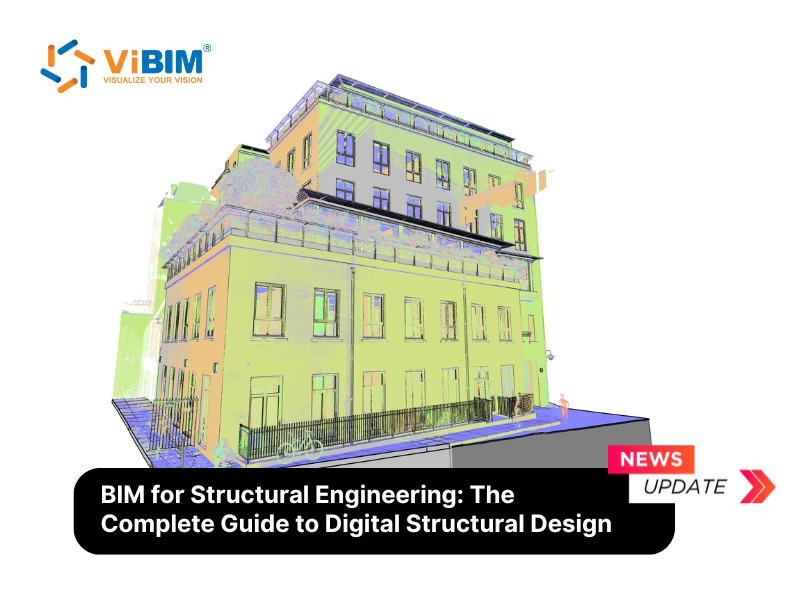
BIM-based structural workflows in Revit and Tekla reduce these risks by linking member properties to analysis models, so changes in design update drawings and calculations simultaneously. For a broader look at how BIM reshapes the structural engineering process, see BIM for structural.

MEP Drawings (M, E, P-Series)
MEP drawings cover mechanical, electrical, and plumbing systems — the building’s circulatory, nervous, and respiratory networks. These three disciplines together account for 40% to 60% of a commercial building’s construction cost and generate the highest volume of coordination issues on most projects.
Each discipline produces its own sheet set: M-series for mechanical and HVAC, E-series for electrical, P-series for plumbing. All three overlay on architectural floor plans as background. MEP systems compete for the same ceiling and shaft space — ductwork, conduit, and piping must route around structural members and around each other, with clearance tolerances as tight as 2 inches (50 mm) in congested corridors. BIM clash detection flags conflicts digitally before they become expensive rework in the field.
Mechanical (HVAC) drawings show heating, ventilation, and air conditioning systems — equipment locations, ductwork routing, diffuser placement, and control sequences. Equipment schedules list air handling units and rooftop units with capacity ratings. Supply and return ductwork dimensions appear in inches (width × height for rectangular duct, diameter for round). Mechanical drawings carry the M-series prefix.
Electrical drawings map power distribution, lighting layouts, and low-voltage systems. Single-line diagrams show the power distribution hierarchy from utility transformer through the main switchboard to branch circuits. Lighting plans locate fixtures and assign switching groups. Power plans show receptacle locations and dedicated circuits. Low-voltage drawings cover fire alarm, data and telecom infrastructure, security, and audio-visual systems. They carry the E-series prefix.
Plumbing drawings document domestic water supply, sanitary waste and vent systems, storm drainage, and natural gas piping. Floor plans show fixture locations and horizontal pipe routing. Riser diagrams show vertical pipe runs across multiple floors. Isometric drawings provide a 3D representation of piping systems on a single sheet — mandatory for permit review in most US jurisdictions. They carry the P-series prefix.
For renovation and retrofit projects, original MEP drawings rarely reflect decades of field modifications — replaced equipment, rerouted piping, added circuits. Point cloud data from 3D laser scanning captures existing MEP routing with millimeter-level precision. Scan to BIM conversion converts this data into coordinated MEP Revit models that generate accurate as-existing drawings — eliminating the guesswork that causes most MEP rework on renovation projects.
For a focused look at how BIM streamlines MEP coordination across all three disciplines, see BIM for MEP.

Fire Protection Drawings (FP-Series)
Fire protection drawings document active suppression systems and fire alarm systems required by the International Building Code (IBC), NFPA 13 (automatic sprinklers), and NFPA 72 (fire alarm and signaling). Fire protection engineers produce these under the FP-series prefix.
Active system drawings show sprinkler layouts — pipe routing and sizing, head spacing, and hydraulic design areas — along with the system type (wet, dry, pre-action, or deluge). Fire alarm sheets locate the fire alarm control panel (FACP), smoke detectors, heat detectors, manual pull stations, and notification appliances. High-rise buildings add standpipe and fire pump system drawings. Passive fire protection — fire-rated assemblies, dampers, and firestopping — appears on both FP and architectural sheets, requiring coordination across disciplines.
The Authority Having Jurisdiction (AHJ) — typically the local fire marshal — reviews and approves fire protection drawings before the building department issues a construction permit. Some jurisdictions also require third-party plan review for sprinkler and alarm systems.

Phase-Based Construction Drawings
Not all construction drawings belong to a single engineering discipline. Shop drawings and as-built drawings are defined by when they enter the project timeline — after contract award and after construction, respectively. Contractors, fabricators, and field personnel produce them in response to the design drawings.
Shop Drawings
Shop drawings translate design-intent drawings into fabrication-level instructions. Contractors, subcontractors, and fabricators produce them — not the design team. This distinction defines their legal status: the design team reviews shop drawings for general conformance with design intent but does not assume responsibility for fabrication accuracy.
Design drawings say WHAT to build. Shop drawings say HOW. They include cut lists, weld symbols, bolt patterns, erection sequences, and material procurement specifications tied to a specific fabricator’s equipment and capabilities. Common categories include structural steel connection details and piece marks, precast concrete panel layouts and embed locations, curtain wall mullion sections and anchor details, and MEP spool drawings for piping and duct section layouts.
The architect or engineer reviews each submittal and responds with one of four stamps: Approved, Approved as Noted, Revise and Resubmit, or Rejected. BIM fabrication models in tools like Tekla Structures and SysQue now generate shop drawings directly from coordinated 3D geometry, reducing the manual drafting errors that historically plagued the submittal process.

As-Built and Record Drawings
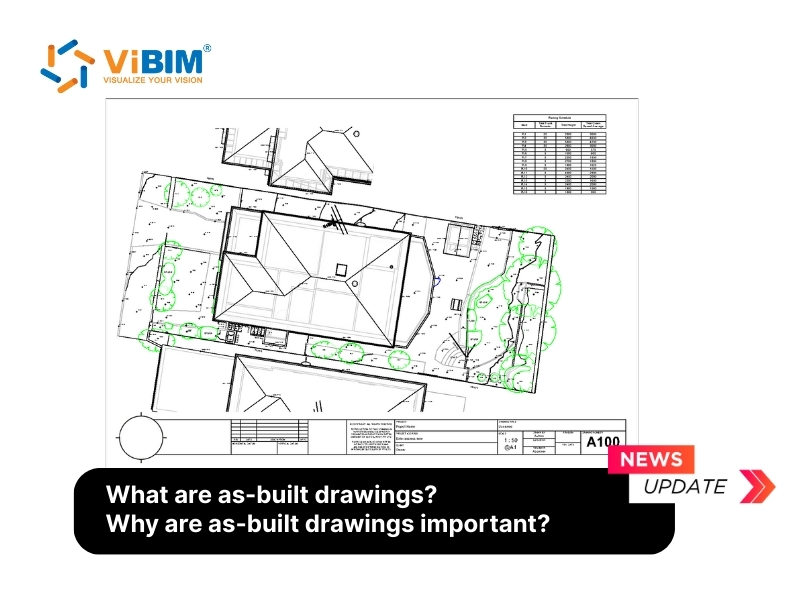
As-built drawings document the final constructed condition of a building — every deviation from the original construction drawings that occurred during the build. For a detailed look at as-built terminology and documentation requirements, see what are as builts drawings.
Two related terms describe this documentation, and they mean different things. “As-built drawings” are the contractor’s field markups — redline annotations drawn directly on printed construction drawings to document changes: relocated walls, shifted ductwork, substituted materials, adjusted pipe routes. “Record drawings” are architect-verified final documents that incorporate contractor redlines into a clean, coordinated drawing set per AIA G704. As-builts are raw field data. Record drawings are the processed, official deliverable submitted at project closeout.
Traditional as-built documentation depends entirely on field personnel diligence. A rushed superintendent may skip redlines for weeks. Hand-drawn annotations lose spatial precision. Paper drawings deteriorate in storage. And many existing buildings have no as-built documentation at all — original drawings lost, destroyed, or simply never produced.
3D laser scanning eliminates these gaps. Terrestrial scanners capture millions of coordinate points per second, generating a point cloud that represents the building’s actual geometry with millimeter-level accuracy — ±2 mm to ±6 mm (±0.08 in. to ±0.24 in.) at typical scanning distances. This point cloud becomes the source data for verified as-built BIM models.
ViBIM’s Scan to BIM services process point cloud data into disciplined Revit models — architectural, structural, and MEP — at LOD 100 through LOD 400. These models form the basis of ViBIM’s As-Built Scan to Modeling services, which generate accurate as-built drawing sets automatically: floor plans, sections, elevations, MEP layouts, and equipment schedules. The model-to-drawing workflow eliminates manual redlining and produces coordinated, searchable documentation for facility management and future renovation planning.
Most construction contracts mandate as-built documentation as a closeout deliverable. AIA A201 Section 3.11 obligates the contractor to maintain records of field changes throughout construction. Government projects — GSA, Department of Defense, Veterans Affairs — increasingly require BIM-based as-built models delivered at specified LOD requirements rather than traditional 2D redline sets.

The drawing types above cover what gets produced and by whom. Two related questions follow: how are these drawings created, and how do you read them once they land on your desk?
How Are Construction Drawings Created?
Construction drawings are produced through three methods — hand drafting, 2D CAD, and Building Information Modeling (BIM) — with BIM now the standard for new construction across the US, UK, Scandinavia, and Singapore.
Hand drafting on vellum or mylar dominated through the 1980s. Every line was ink on film. Revisions meant erasing and redrawing. The process demanded precision but offered zero coordination automation.
2D CAD software — AutoCAD, MicroStation — digitized drafting starting in the late 1980s. Revisions became faster. Copies became instant. But a floor plan, a section, and a detail were three separate files. Change one, and you updated the others manually.
BIM shifted the model. Software like Revit, ArchiCAD, and Vectorworks builds a coordinated 3D model first. Drawings become filtered views of that model. Move a wall, and every plan, section, elevation, and detail that shows that wall updates automatically. Quantity takeoffs, 4D scheduling, and 5D cost estimation layer directly onto the model geometry. The model is the single source of truth.
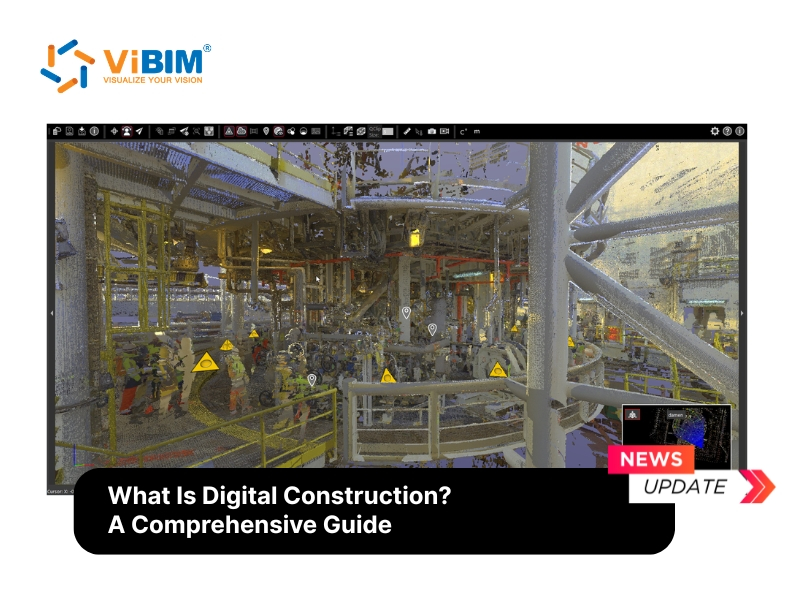
For existing buildings — renovation, adaptive reuse, facility management — original drawings may not exist or may not reflect decades of modifications. 3D laser scanning captures current conditions as a dense point cloud. BIM modelers then convert that point cloud into a Revit model capable of generating any drawing type discussed in this guide. This Scan to BIM workflow bridges the documentation gap between new construction and the existing built environment.
How to Read Construction Drawings
Reading construction drawings requires understanding five elements: the title block, the drawing scale, the symbol legend, the dimension system, and cross-reference navigation between sheets.
The title block sits in the lower-right corner of every sheet. It identifies the project name, sheet number, drawing title, scale, issue date, revision history, and the seal of the licensed professional responsible. Read the title block first — it tells you which discipline, which version, and who takes professional responsibility.
Scale determines how drawn dimensions translate to real-world measurements. Architectural plans typically use 1/4″ = 1′-0″ (1:48). Site plans use 1″ = 20′ (1:240) or smaller. Details enlarge to 1-1/2″ = 1′-0″ (1:8) or bigger. Always check the graphic scale bar printed on the sheet — printed copies and PDF screens may not reproduce at the original size, making numeric ratios unreliable.
Standard symbols per AIA and CSI conventions represent door swings, window types, section cut marks, elevation tags, detail callouts, and material hatching patterns. Most projects include a legend sheet — typically G-001 or A-001 — that defines project-specific symbols.
Dimensions in US construction use feet and inches (imperial). Metric projects use millimeters. Dimension strings read from outside to inside: overall building dimension first, then grid-to-grid spacing, then individual element dimensions.
Cross-references link views across sheets. A section mark on floor plan A-101 labeled “3/A-301” means section number 3 is drawn on sheet A-301. Following these references lets you navigate from a plan view to the detailed view of any component without searching through the set.
| View Type | US Scale | Metric Equivalent | Typical Use |
| Floor plan | 1/4″ = 1′-0″ | 1:48 | Room layouts, walls, doors, dimensions |
| Site plan | 1″ = 20′ | 1:240 | Property boundaries, grading, utilities |
| Building section | 1/4″ = 1′-0″ | 1:48 | Floor-to-floor assemblies, vertical relationships |
| Wall section | 3/4″ = 1′-0″ | 1:16 | Exterior wall layers, foundation-to-roof |
| Detail | 1-1/2″ = 1′-0″ | 1:8 | Material connections, fasteners, tolerances |
| Civil grading | 1″ = 30′ | 1:360 | Contour lines, drainage, elevation benchmarks |
Conclusion
Construction drawings span two classification axes — discipline-based documents produced by the design team and phase-based documents produced by contractors and field personnel. Each type serves a different audience at a different project stage, and each carries different legal weight. This framework helps project teams locate the right drawing, verify the right information, and avoid coordination failures that generate costly rework.
BIM workflows continue to consolidate what were once separate 2D documents into coordinated views of a single model. The shift from sheets to models hasn’t eliminated the need for construction drawings — it has made them more accurate, more connected, and easier to maintain across a project’s lifecycle.
For existing buildings, 3D laser scanning and Scan to BIM workflows close the documentation gap. ViBIM’s Revit modeling outsourcing convert point cloud data into LOD 100–400 Revit models that generate any drawing type covered in this guide — from architectural floor plans and MEP coordination layouts to verified as-built records ready for facility management and future renovation.
ViBIM
Address: 10th floor, CIT Building, No 6, Alley 15, Duy Tan street, Cau Giay ward, Hanoi, Vietnam
Phone: +84 944 798 298
Email: info@vibim.com.vn