Building Information Modeling (BIM) brings a new approach to sustainability by enabling data-driven and precise management of construction projects. Accurate 3D modeling allows sustainable performance analysis right from the design phase, while eco-smart material selection and waste reduction techniques help minimize environmental impact. Faster coordination also contributes to more sustainable construction processes and improved resource allocation across teams and stages.
Energy efficiency becomes achievable when BIM supports smart renovation planning and lower energy consumption tracking throughout a building’s lifecycle. Its data-driven insights make it easier to optimize building orientation, choose energy-efficient designs, and streamline logistics to reduce carbon emissions. By involving project owners in these simulations and visualizations, BIM encourages more sustainable decisions across every level of construction.
This article will explore the connection between BIM and sustainability, highlighting how they work together to create long-term value and practical benefits for sustainable construction practices. Continue reading to understand how BIM can translate sustainable goals into real-world outcomes.
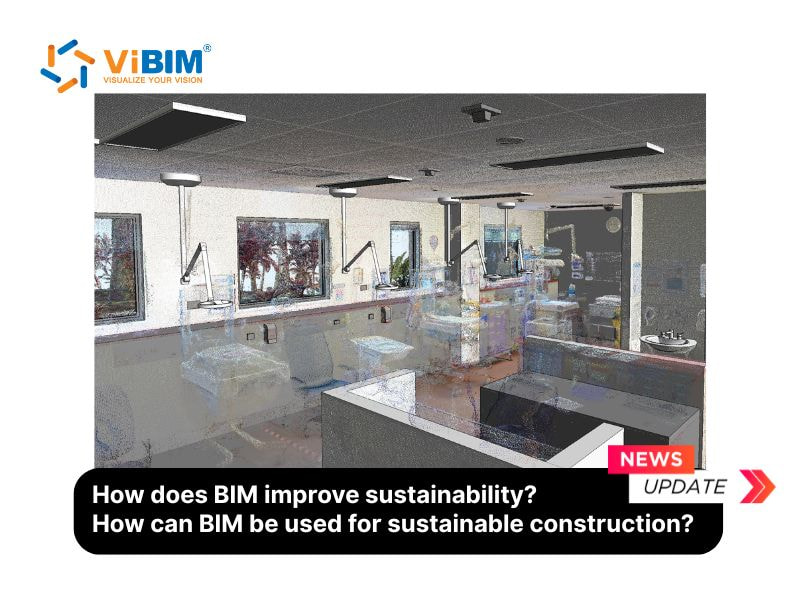
How is sustainability defined within construction?
Sustainability within construction refers to using resources responsibly so that present needs are met without reducing the ability of future generations to meet their own. The concept focuses on protecting the environment while maintaining economic growth and improving social well-being.
Buildings have a significant environmental impact, as the International Energy Agency’s Tracking Buildings 2021 report reveals that construction and building operations account for approximately 37% of global energy and carbon emissions, including 10% from material manufacturing alone.
Sustainable construction methods aim to reduce waste, conserve energy and water, and limit pollution throughout a building’s life cycle. These practices encourage the use of durable materials that can be reused or recycled after use, reducing long-term environmental strain. At the same time, sustainable buildings are designed for people’s comfort and health, creating efficient, safe, and pleasant spaces that support both environmental responsibility and human well-being.
How does BIM improve sustainability?
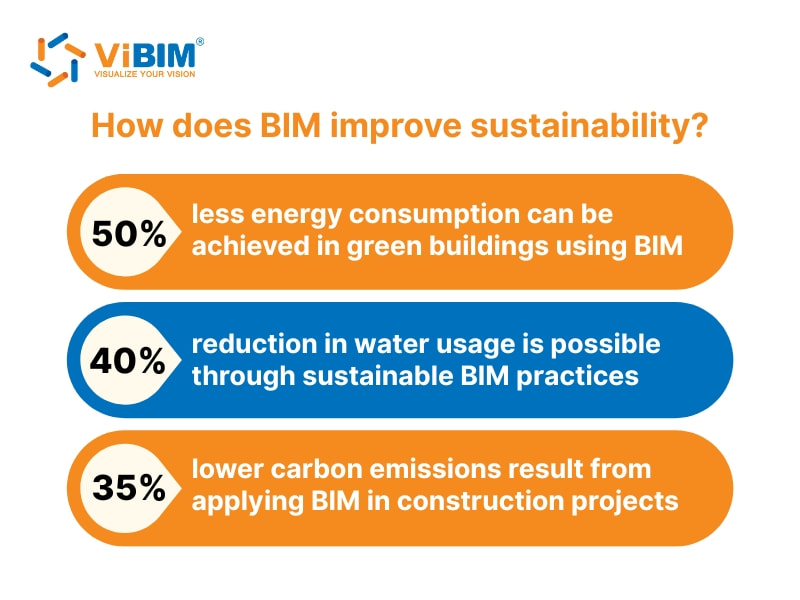
BIM improves sustainability in six main ways, many of which align with the principles of 6D BIM focused on sustainability analysis: accurate sustainable modelling, eco-smart material selection, waste reduction efficiency, faster and greener construction, smart renovation planning, and lower energy consumption. Green buildings can reduce energy consumption by up to 50%, water use by 40%, and carbon emissions by 35% compared to conventional structures.
The next section will examine each of these aspects in detail, supported by findings from the journal “BIM in green building: Enhancing sustainability in the small construction project” by Waqar, A., Othman, I., Saad, N., Azab, M., and Khan, A. M. (2023).
Accurate sustainable modelling
BIM enables designers to develop precise and realistic 3D models that enhance sustainability throughout the entire construction process. Parameters such as ventilation, daylight, indoor air quality, and heat transfer can be tested visually before any physical work begins. When performance gaps appear, design changes can be implemented immediately, saving time, cutting rework, and improving energy efficiency.
Research indicates that early-stage design optimization improves by approximately 37% with the adoption of BIM. With over 57% of design variance explained by BIM-based analysis, this technology strengthens the ability to predict and refine energy-saving solutions from the beginning.
Eco-smart material selection
BIM supports smarter material choices by comparing environmental impact, carbon footprint, and life-cycle data. It helps identify materials that promote recycling or reuse and replace high-impact options with greener alternatives.
Studies show that BIM improves sustainable material selection by approximately 30%. This confirms that BIM serves as more than a design tool, but it acts as a dependable decision-making system that guides architects and engineers in selecting environmentally responsible materials throughout the construction process.
Waste reduction efficiency
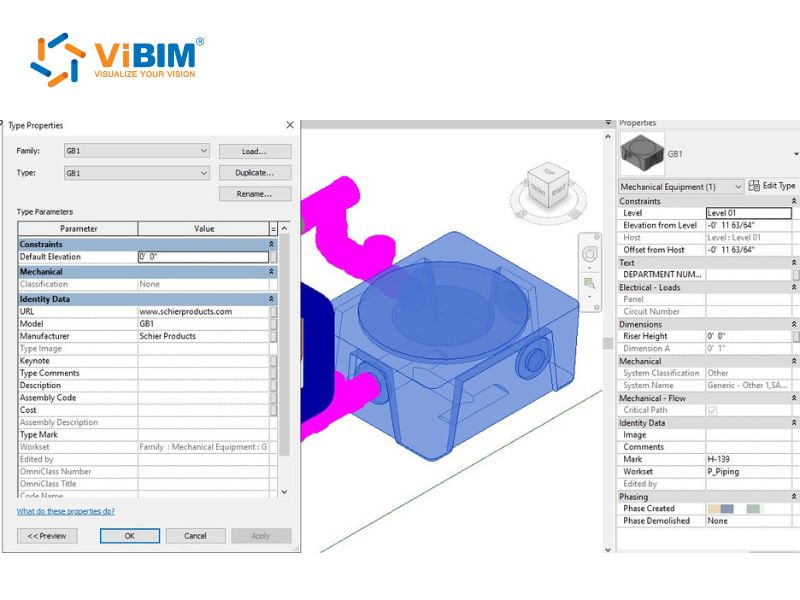
Approximately 30% of building materials worldwide are wasted on-site; however, BIM helps minimize this by providing precise cost and quantity estimations. Accurate calculations prevent over-ordering and reduce excess materials. The use of prefabrication further lowers waste and emissions by enabling off-site production under controlled conditions. This process results in fewer transport trips, less noise, and smaller landfill contributions. Research indicates that BIM-driven waste reduction enhances sustainability performance by approximately 32% underscoring its significant role in efficient resource utilization.
Faster, greener construction
BIM also accelerates construction by improving collaboration and allowing real-time updates among project teams. Centralized data makes it easy to modify designs quickly without creating new drawings, shortening project timelines and minimizing idle work. Shorter construction periods directly lower energy use, noise levels, and equipment emissions.
When applied alongside sustainable practices, BIM projects can cut energy consumption by up to 50%, water usage by 40%, and carbon emissions by 35%. Faster project delivery leads to cleaner, quieter, and more sustainable building operations.
Smart renovation planning
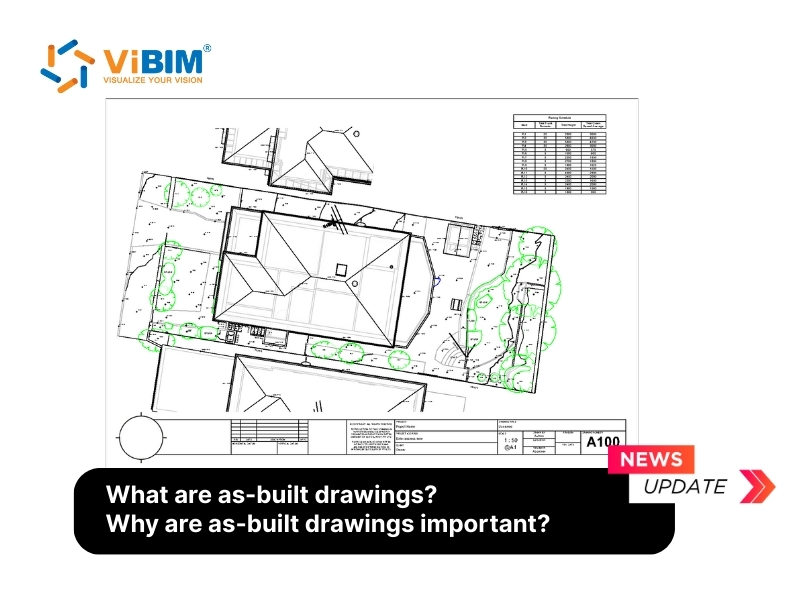
Renovation processes benefit from BIM through accurate as-built data that helps teams identify actual improvement needs. Centralized digital models eliminate redundant surveys and unnecessary demolitions, ensuring that resources are used efficiently.
By planning upgrades only where needed, BIM reduces environmental disruption and long-term maintenance costs. Coordinated refurbishment planning also supports the integration of energy-efficient systems, extending a building’s life and maintaining its environmental performance over time.
Once the renovation is complete, you can further maximize your asset’s operational efficiency by learning how to use BIM for facility management to streamline daily maintenance and reduce long-term costs.
Lower energy consumption
BIM’s sustainability impact continues after construction through real-time monitoring of building operations. Integrated BIM analytics tools track energy consumption, water usage, and overall efficiency, enabling the quick identification of underperforming systems.
Research indicates a 22% improvement in energy management through the use of BIM. These figures demonstrate BIM’s measurable contribution to lowering operational costs, reducing emissions, and maintaining environmental balance throughout the building’s lifecycle.
How to use BIM for sustainable construction?
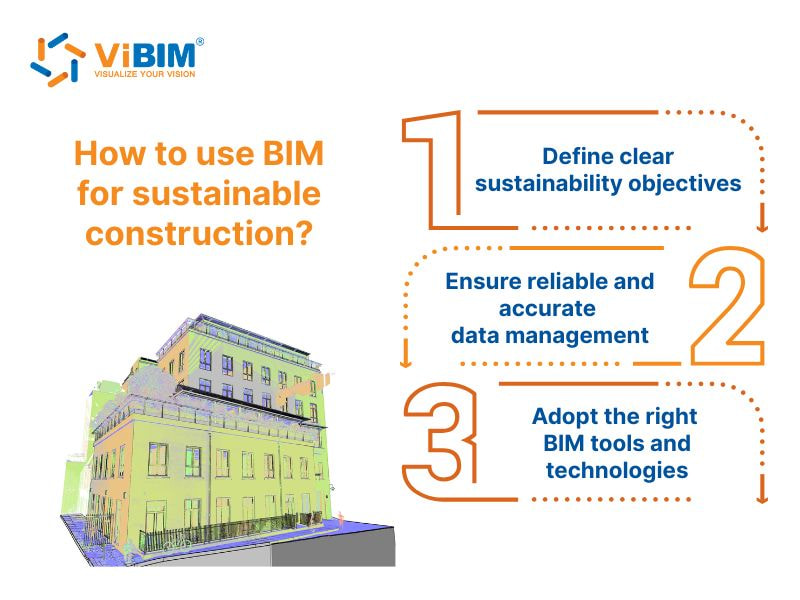
There are three primary ways to utilize BIM for sustainable construction: defining clear sustainability objectives, maintaining reliable and accurate data management, and selecting the appropriate BIM tools and technologies. Each of these elements plays a distinct role in enhancing resource efficiency and minimizing environmental impact throughout the project lifecycle. The following sections explain how each method contributes to sustainability outcomes.
Define clear sustainability objectives
Clear objectives create the foundation for sustainable construction. Project teams begin by identifying sustainability targets such as achieving green certifications, improving energy efficiency, or reaching net-zero performance. By linking these goals directly to BIM models, sustainability becomes an integral part of the design, analysis, and execution process.
When project data and certification criteria are attached to the model, tracking compliance becomes simpler and faster. This process minimizes documentation errors, reduces unnecessary work, and supports consistent progress toward environmental goals without incurring extra costs or requiring design changes later in construction.
Ensure reliable and accurate data management
Accurate data forms the basis of every sustainable project decision. Incorrect or incomplete information often leads to wasteful material use, energy inefficiency, and costly rework, while accurate data supports smarter modeling and analysis. Teams that aim for sustainability spend time verifying and validating data inputs before modeling begins.
Project success also depends on assigning responsibility for maintaining data quality. By having BIM managers or key team members oversee model consistency and data accuracy, teams can automate material takeoffs, reduce duplication, and achieve measurable sustainability results across project stages.
Adopt the right BIM tools and technologies
The use of the right BIM software and plug-ins helps project teams meet sustainability goals more efficiently. Platforms that include built-in analysis or simulation tools allow accurate evaluation of energy performance, daylight use, and material impact before construction starts. Choosing tools that integrate with APIs also expands analytical capabilities for specific project requirements.
Creating a technology setup that connects office modeling work with on-site teams ensures that sustainability insights are applied effectively during the construction process. As BIM technology advances, these tools continue to support better planning, reduced waste, and more sustainable outcomes across the built environment.
The article explained how BIM and sustainability work together to improve building performance and reduce environmental impact. It described how BIM helps design teams optimize energy use, manage materials more efficiently, and support better decision-making throughout the construction process. Each section showcased practical applications, ranging from energy modeling and waste reduction to logistics improvement and owner engagement, providing readers with a clear understanding of the environmental advantages of BIM for sustainable construction.
ViBIM focuses on delivering precise BIM Modeling services from Point Cloud data (Scan to BIM), using Revit as the main authoring tool on the Autodesk platform. As a specialized Revit BIM modeling service provider, the team provides accurate models for building surveyors, existing and as-built documentation, as well as for design and engineering projects. Contact ViBIM today to discuss your project requirements and receive a complimentary quote.
Vietnam BIM Consultancy and Technology Application Company Limited (ViBIM)
- Address: 10th floor, CIT Building, No 6, Alley 15, Duy Tan street, Cau Giay ward, Hanoi, Vietnam
- Phone: +84 944 798 298
- Email: info@vibim.com.vn